How AI Tools Are Changing Digital Marketing For Small Businesses
There are very few moments in business history where the playing field between small operators and large corporations genuinely levels out, but artificial intelligence in digital marketing is arguably...
There are very few moments in business history where the playing field between small operators and large corporations genuinely levels out, but artificial intelligence in digital marketing is arguably one of them. For years, the reality for small business owners was that serious marketing capability required serious budgets, large teams, and access to platforms and technologies that were simply out of reach. That is changing, and it is changing fast. Understanding how AI tools are changing digital marketing for small businesses is no longer just an interesting topic for tech enthusiasts; it is a practical conversation that every small business owner needs to be having right now.
The tools available today, many of which are affordable or even free at entry level, allow small businesses to compete in ways that would have seemed impossible just a few years ago. From writing compelling email campaigns to analysing customer behaviour and automating repetitive tasks, AI is reshaping what small teams can realistically achieve. The question is not really whether you should be paying attention to this shift, because you absolutely should. The question is where to start and how to use these tools in a way that genuinely moves your business forward.
AI-Powered Content Creation and Copywriting
One of the most immediate and accessible ways small businesses are benefiting from AI is through content creation. Tools like ChatGPT and Jasper are being used by businesses every single day to draft blog posts, social media captions, product descriptions, and email campaigns in a fraction of the time it would traditionally take.
For a small business owner who is also the accountant, the sales team, and the customer service department all rolled into one, this is a genuinely significant shift. The ability to produce a well-structured, on-brand email newsletter in twenty minutes rather than two hours is not a small thing. It is the kind of time saving that directly impacts what you can get done in a week.
That said, AI-generated content works best when it is treated as a strong starting point rather than a finished product. The businesses getting the most value from these tools are those who use AI to handle the heavy lifting and then apply their own expertise, personality, and knowledge to make the content genuinely useful and authentic. The goal is efficiency without sacrificing the human touch that your audience actually connects with.
Email Marketing and Personalisation at Scale
Email marketing has always offered a strong return on investment for small businesses, but the challenge has often been delivering the right message to the right person at the right time. AI is making this kind of personalisation far more achievable, even for businesses without a dedicated marketing team.
Platforms like Mailchimp and Klaviyo now incorporate AI-driven features that analyse subscriber behaviour, predict the best times to send campaigns, suggest subject lines likely to improve open rates, and segment audiences automatically based on how they have interacted with previous emails. What once required a specialist with deep knowledge of email marketing strategy can now be guided significantly by the platform itself.
Consider a small independent retailer who sells seasonal products. Previously, sending personalised recommendations to different customer segments would have required manual list management and a significant time investment. With AI-powered email tools, that same retailer can set up automated flows that respond to browsing behaviour, purchase history, and engagement patterns, delivering a more relevant experience to each customer without constant manual intervention. This is precisely how AI tools are changing digital marketing for small businesses in practical, day-to-day terms.
Want more insights like this?
Join thousands of marketers getting weekly tips and strategies.
Smarter Advertising and Budget Management
Paid advertising has historically been an area where small businesses have struggled. Without the budget to test extensively or the expertise to optimise campaigns consistently, it was easy to spend money without seeing meaningful returns. AI-driven advertising tools are beginning to address this problem in a meaningful way.
Google's Performance Max campaigns and Meta's Advantage+ campaigns both use machine learning to optimise ad delivery, creative selection, and audience targeting automatically. The algorithms learn from performance data continuously, adjusting where and when your ads are shown to maximise the outcomes you care about most. For a small business with a modest budget, this kind of automated optimisation can make the difference between a campaign that generates enquiries and one that simply drains the account.
The key for small businesses is to make sure the foundations are in place before relying on these automated systems. Conversion tracking needs to be set up correctly, creative assets need to be strong and varied, and the goals fed into the platform need to reflect what the business actually values. AI can optimise brilliantly, but it can only optimise towards what it is told matters. Give it the right inputs and the results can be impressive.
Customer Service and Chatbot Automation
Responding to customer enquiries promptly is one of the most important things a small business can do to build trust and convert interest into sales. The problem is that most small business owners simply cannot be available around the clock. AI-powered chatbots and customer service tools are filling this gap in a way that feels considerably more natural than older, more rigid automated systems.
Tools like Tidio and Intercom allow small businesses to deploy AI-driven chat experiences on their websites that can answer common questions, qualify leads, book appointments, and guide visitors towards a purchase or enquiry, all without any human involvement at that initial stage. When a real person does need to step in, the conversation history and context is already there, making the handover seamless.
This is not about replacing genuine human interaction. It is about making sure that when someone lands on your website at eleven o'clock on a Sunday evening with a question, they get a useful response rather than nothing at all. That kind of availability, delivered through smart automation, has a real impact on conversion rates and customer satisfaction.
SEO and Content Strategy
Search engine optimisation is another area where AI tools are delivering genuine value for small businesses. Platforms like Surfer SEO and SEMrush now incorporate AI features that help businesses identify content opportunities, analyse competitor strategies, and produce content briefs that are aligned with what search engines are actually rewarding.
For a small business trying to build organic visibility without a large content team, this kind of AI-assisted guidance can be transformative. Rather than guessing what topics to write about or how to structure a page, you can work from data-driven recommendations that give your content a far stronger chance of performing well in search results.
It is worth understanding that AI tools assist and accelerate the process, but the expertise, authenticity, and genuine helpfulness that makes content rank and resonate still needs to come from you. Google is becoming increasingly sophisticated at identifying content that exists purely to satisfy an algorithm versus content that genuinely serves the reader. Use AI to be more efficient, not to take shortcuts that ultimately undermine your credibility.
Analytics, Insight, and Smarter Decision Making
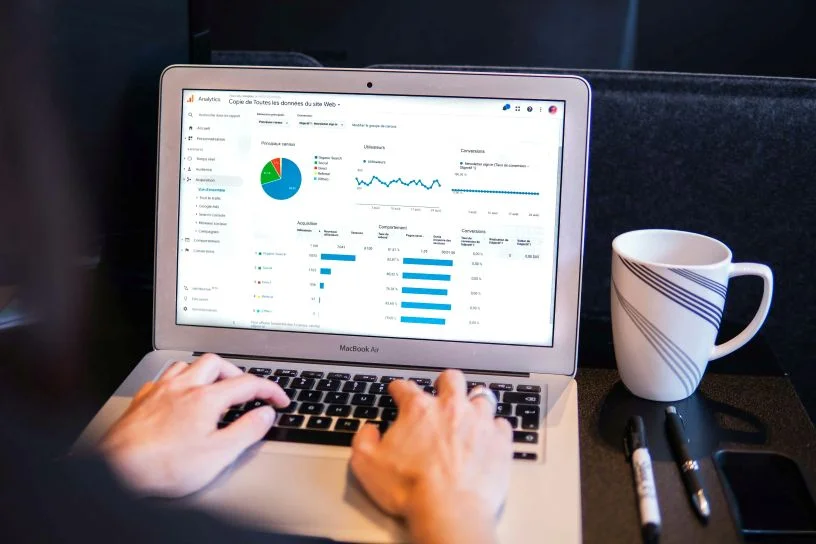
Perhaps one of the less discussed but equally important ways AI is impacting small business digital marketing is through analytics and insight. Tools like Google Analytics 4 now incorporate predictive metrics and machine learning to surface insights that previously would have required a data analyst to identify.
Understanding which channels are actually driving conversions, which customer segments are most valuable, and where people are dropping off in the buying journey are all questions that AI-assisted analytics tools are now making more accessible. For small businesses making decisions about where to allocate limited budgets, this kind of clarity is genuinely powerful.
The businesses that will benefit most from this are those that take the time to actually engage with the data rather than treating analytics as a box-ticking exercise. The tools are increasingly good at surfacing what matters; the responsibility of acting on those insights still sits firmly with the business owner.
Where To Go From Here
Understanding how AI tools are changing digital marketing for small businesses is one thing; actually integrating these tools into your day-to-day operations in a way that makes a difference is another. The temptation is to try everything at once, which usually leads to doing nothing particularly well. A more sensible approach is to identify the one or two areas in your marketing where you are currently spending the most time or getting the least return, and focus your attention on the AI tools most relevant to those specific challenges.
If email marketing is taking too long and not performing as well as you would like, explore what Klaviyo or Mailchimp's AI features can do for your campaigns. If content creation is a bottleneck, start experimenting with AI writing assistants and find a workflow that works for your brand. If paid advertising feels like a black box, take the time to understand how Performance Max and Advantage+ campaigns work and what they need from you to perform well.
The shift towards AI-powered digital marketing is not a trend that is going to reverse. The tools will continue to improve, become more accessible, and increasingly become the baseline expectation rather than a competitive advantage. Small businesses that start building their understanding and capability now are the ones that will be best positioned to benefit from everything that comes next. The opportunity is genuinely significant, and it is available to businesses of every size.
Ian
Ian has worked in Digital Marketing for decades, and is a Google Partner for Google Ads and an expert in onsite and technical SEO. He has worked with hundreds of clients, helping them achieve success online, through SEO, PPC and Digital Marketing, working with local businesses through to national retailers.
View all posts →Related Articles

Where To List Your Products For Sale To Gain More Customers
In today's competitive digital landscape, knowing where to list your products for sale to gain more customers can make the difference between a thriving business and one that struggles to find its aud...

Is Digital Marketing A Good Career
There are very few industries that have transformed as rapidly as digital marketing, and when it comes to career opportunities, I am a true believer that digital marketing offers one of the most dynam...
Is GA4 Really That Much Of An Improvement On The Previous Google Analytics
Google Analytics 4 has been with us for a while now, and yet the question still lingers in many marketers' minds: is GA4 really that much of an improvement on the previous Google Analytics? Having wor...