
Why Keyword Planner Traffic Might Not Relate To Real Life Success
When it comes to planning your digital marketing strategy, Google's Keyword Planner stands as one of the most widely used tools for understanding search volume and traffic potential.
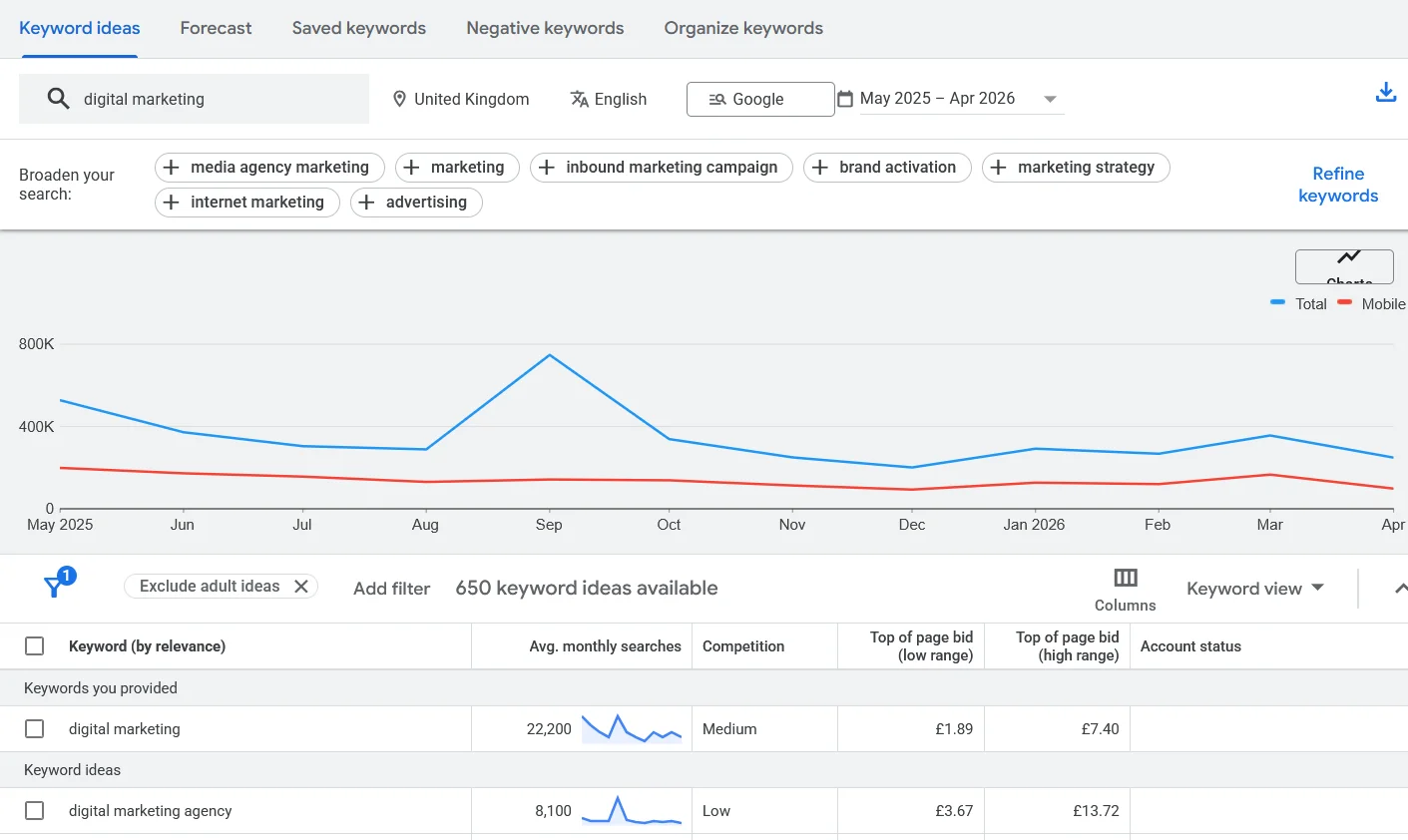
When it comes to planning your digital marketing strategy, Google's Keyword Planner stands as one of the most widely used tools for understanding search volume and traffic potential. Millions of marketers rely on its data to make decisions about which keywords to target, how much budget to allocate, and what kind of traffic they might expect. But here's the uncomfortable truth that many discover too late: the traffic estimates and search volumes shown in Keyword Planner often paint a very different picture to what actually happens when you launch your campaigns or optimise your website.
If you've ever found yourself scratching your head wondering why your carefully researched keywords aren't delivering the results the planner suggested they would, you're not alone. Understanding why Keyword Planner traffic might not relate to real life success is crucial for anyone serious about digital marketing, whether you're running Google Ads campaigns or working on organic search optimisation.
The Difference Between Search Volume and Actual Traffic
One of the biggest misconceptions about Keyword Planner is that the search volume data directly translates to the traffic you'll receive. The tool shows you how many people are searching for specific terms, but it doesn't account for the countless variables that determine whether those searchers will actually click on your result.
Search volume represents total searches across all results, but your website will only capture a fraction of that traffic based on your ranking position, click-through rates, and how compelling your listing appears compared to competitors. A keyword showing 10,000 monthly searches might only deliver 500 visitors to your site if you're ranking in position five, and even fewer if your title and description don't entice users to click.
Smart strategy: Use Keyword Planner data as a starting point for understanding market size, but combine it with click-through rate estimates based on your expected ranking positions to get more realistic traffic projections.
Keyword Intent Versus Business Goals
Keyword Planner excels at showing you what people are searching for, but it's less helpful at revealing why they're searching and what they intend to do next. This disconnect between search intent and your business goals can lead to targeting keywords that generate traffic but fail to drive meaningful results.
Consider a software company targeting the keyword "project management" because it shows impressive search volumes. However, people searching for this broad term might be looking for general information, academic research, or free tools rather than premium software solutions. Meanwhile, a more specific keyword like "enterprise project management software pricing" might show lower search volume but attract visitors who are much closer to making a purchase decision.
The Keyword Planner data doesn't distinguish between these different types of searchers, treating all searches as equal when they clearly aren't from a business perspective. High search volume means nothing if those searches don't align with what your website offers or what your visitors want to accomplish.
Quick fix: Analyse the search results for your target keywords manually. Look at what type of content ranks highly and what questions the results are answering to better understand searcher intent.
Want more insights like this?
Join thousands of marketers getting weekly tips and strategies.
Competition Reality Check
The competition metrics in Keyword Planner focus primarily on Google Ads competition, showing you how many advertisers are bidding on specific terms. This gives you a skewed view of the actual difficulty you'll face in both paid and organic search, especially if you're working on SEO rather than running ads.
A keyword might show low competition in the planner because few advertisers are bidding on it, but the organic search results could be dominated by established websites with strong domain authority and comprehensive content. Conversely, some keywords with high advertising competition might have relatively weak organic results, presenting opportunities that the planner's metrics don't reveal.
The tool also doesn't account for the quality and resources of your competitors. Competing against ten small local businesses is vastly different from competing against ten multinational corporations, even if the competition level appears the same in the data.
Smart strategy: Manually review the top ranking pages for your target keywords, assessing their domain authority, content quality, and the resources they've invested in ranking for those terms.
Seasonal and Trending Fluctuations
Keyword Planner typically shows average monthly search volumes, which can mask significant seasonal variations and trending patterns that dramatically impact real-world performance. A keyword might average 5,000 searches per month, but if 80% of those searches happen during a specific three-month period, your year-round strategy based on that average will be fundamentally flawed.
These fluctuations become even more complex when you consider that seasonal keywords often have different competition levels throughout the year. During peak seasons, more competitors enter the market, driving up costs and making it harder to achieve visibility. The static data in Keyword Planner doesn't prepare you for these dynamic market conditions.
Trending topics and current events can also create temporary spikes in search volume that the historical data in Keyword Planner won't reflect until much later. By the time the tool recognises a trend, the opportunity might have already passed.
Quick fix: Use Google Trends alongside Keyword Planner to understand search patterns over time and identify seasonal opportunities or declining interest in specific terms.
Geographic and Demographic Blind Spots
Whilst Keyword Planner allows you to filter by location, it doesn't provide detailed insights into the demographic characteristics of searchers or how search behaviour varies within your target geographic area. This limitation can lead to misallocated resources and missed opportunities.
The tool might show strong search volume for your target location, but it won't tell you if those searches are concentrated in areas where your business can't serve customers, or if the searchers match your ideal customer profile. A keyword might be popular among demographics that aren't likely to purchase your products or services, making the high search volume misleading.
Local variations in language, search habits, and market maturity can also impact how keyword data translates to real results. Terms that work well in major metropolitan areas might perform differently in smaller towns, even within the same country.
Smart strategy: Combine Keyword Planner data with customer research and analytics from your existing website to understand how your actual audience searches and what terms drive the most valuable traffic.
The Algorithm Evolution Factor
Search engines continuously evolve their algorithms, changing how they interpret queries and deliver results. These updates can dramatically alter the effectiveness of keywords, regardless of what historical data suggests. Keyword Planner shows you what has happened, but it can't predict how algorithm changes will impact future performance.
Google's increasing sophistication in understanding search intent means that exact keyword matches are less important than they once were. The search engine now considers context, synonyms, and related concepts when determining which results to show. This shift means that focusing solely on specific keywords identified through the planner might cause you to miss broader content opportunities that could capture more diverse search traffic.
Additionally, features like featured snippets, local packs, and other SERP elements can dramatically reduce the click-through rates to traditional organic results, even for high-volume keywords. Keyword Planner doesn't account for these changes in how search results are displayed and consumed.
Quick fix: Regularly review actual search query data from Google Search Console to see what terms are driving traffic to your site, and compare this with your Keyword Planner research to identify gaps and opportunities.
Moving Beyond the Numbers Game
Success in digital marketing requires looking beyond the appealing simplicity of search volume data and considering the full context of your market, audience, and goals. Keyword Planner remains a valuable tool for research and planning, but it works best when combined with other data sources and real-world testing.
The most successful digital marketing strategies treat keyword data as one input among many, rather than the definitive guide to what will work. By understanding the limitations of why Keyword Planner traffic might not relate to real life success, you can make more informed decisions and set more realistic expectations for your campaigns and SEO efforts.
Rather than chasing the highest search volumes, focus on keywords that align with your business goals, match your audience's needs, and fit within your competitive reality. Test your assumptions with small campaigns or targeted content, and let actual performance data guide your larger investments. This approach takes more work than simply following the numbers, but it leads to much more sustainable and profitable results in the long term.
Ian
Ian has worked in Digital Marketing for decades, and is a Google Partner for Google Ads and an expert in onsite and technical SEO. He has worked with hundreds of clients, helping them achieve success online, through SEO, PPC and Digital Marketing, working with local businesses through to national retailers.
View all posts →Related Articles

Where To List Your Products For Sale To Gain More Customers
In today's competitive digital landscape, knowing where to list your products for sale to gain more customers can make the difference between a thriving business and one that struggles to find its aud...

Is Digital Marketing A Good Career
There are very few industries that have transformed as rapidly as digital marketing, and when it comes to career opportunities, I am a true believer that digital marketing offers one of the most dynam...

Is GA4 Really That Much Of An Improvement On The Previous Google Analytics
Google Analytics 4 has been with us for a while now, and yet the question still lingers in many marketers' minds: is GA4 really that much of an improvement on the previous Google Analytics? Having wor...