
How To Find And Use Long Tail Keywords To Win Easier Rankings
If you have ever sat staring at a keyword research tool wondering how on earth you are supposed to compete with the big brands dominating the top positions on Google, you are not alone. It is one of t...

If you have ever sat staring at a keyword research tool wondering how on earth you are supposed to compete with the big brands dominating the top positions on Google, you are not alone. It is one of the most common frustrations in SEO, and it is also one of the most solvable. The answer, more often than not, comes down to long tail keywords. Understanding how to find and use long tail keywords to win easier rankings is not some kind of secret reserved for agency insiders; it is a practical, proven approach that any website owner or marketer can apply if they know where to look and what to do with what they find.
The principle is straightforward. Broad, short keywords like "shoes" or "digital marketing" attract enormous competition. Longer, more specific phrases like "best waterproof walking shoes for wide feet" or "how to set up a Google Ads conversion goal" attract far less competition, often far more qualified traffic, and in many cases, they convert better because the person searching already knows what they want. This guide walks you through how to find these opportunities and, critically, how to use them effectively once you have them.
What Long Tail Keywords Actually Are
Long tail keywords are search phrases, typically three words or more, that are more specific in their intent than broad head terms. They tend to have lower individual search volumes, but when you consider the cumulative traffic potential of targeting dozens or even hundreds of these phrases, the picture becomes very different. A single head term might receive tens of thousands of searches per month, but the vast majority of all searches conducted online are long tail in nature, which means there is an enormous body of opportunity sitting beneath the surface of most keyword strategies.
What makes them particularly valuable is the intent behind them. Someone searching "running shoes" could be browsing casually, researching a birthday gift, or trying to understand the market. Someone searching "best cushioned running shoes for knee pain" is almost certainly ready to make a decision. That specificity is where the real value lies, both in terms of rankings and in terms of attracting the right audience to your site.
Where To Find Long Tail Keyword Opportunities
There are several reliable methods for uncovering long tail phrases that your target audience is actually using, and the good news is that many of the best sources are either free or very affordable.
Google Search Itself
One of the most overlooked research tools is the search engine you are already using every day. When you type a query into Google, the autocomplete suggestions that appear are a direct reflection of what real people are searching for. These suggestions are gold for long tail research. Similarly, the "People Also Ask" section that appears mid-results and the related searches at the bottom of the page offer a wealth of phrase variations that you might never have considered on your own.
Make a habit of exploring these sections whenever you are researching a new topic or piece of content. They are telling you, in plain language, what questions and queries people in your niche are actually typing into the search bar.
Want more insights like this?
Join thousands of marketers getting weekly tips and strategies.
Dedicated Keyword Research Tools
Platforms like Ahrefs, SEMrush, and Moz all provide detailed keyword data including search volume, keyword difficulty scores, and related phrase suggestions. When you input a broad head term, these tools will surface dozens of long tail variations, often grouped by topic or question type. The keyword difficulty score is particularly useful here; a phrase with a low difficulty score and a reasonable search volume is precisely the kind of target you should be prioritising when you are working to build organic visibility.
If budget is a concern, Google Keyword Planner is free and provides genuine search volume data directly from the source. It is less granular than the paid tools, but it is more than capable of helping you identify long tail opportunities, especially when you use the "Discover new keywords" function and explore the results with an open mind.
Your Own Google Search Console Data
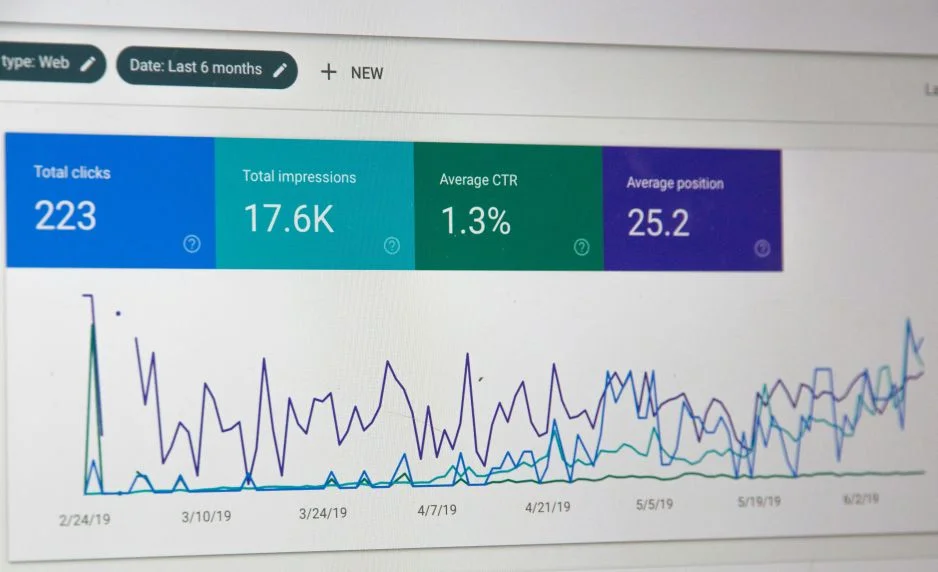
If your site has been live for any period of time, your Google Search Console account is already sitting on a rich seam of long tail keyword data. The Performance report shows you the actual queries people have used to find your site, including the ones where you are currently sitting in positions four through twenty. These are phrases where Google already considers your content relevant, and with a focused optimisation effort, you may be able to push those rankings to the top positions without starting from scratch.
Filtering the query report by impressions and then looking at low click-through rates in the top twenty is one of the most practical ways to find quick wins in your existing content library.
How To Use Long Tail Keywords Effectively
Finding the keywords is only half the job. Using them well is what actually moves the needle, and there are a few principles worth understanding before you start writing or updating content.
Match The Keyword To A Dedicated Page
Each long tail keyword or closely related cluster of phrases should ideally have a dedicated page or piece of content built around it. Trying to cram multiple unrelated long tail phrases into a single page dilutes the relevance signal you are sending to search engines. Think of it this way: if someone lands on a page expecting a detailed answer to their specific question and instead finds a loosely connected collection of topics, they will leave, and that behaviour tells Google that your content is not what it needs to be serving for that query.
Write For The Intent Behind The Phrase
Every long tail keyword has an intent behind it. Some are informational, the person wants to learn something. Some are navigational, they want to find a specific site. Some are transactional, they are ready to buy or enquire. Your content needs to match that intent precisely. If someone is searching for a step-by-step guide, give them a step-by-step guide. If they are searching for a comparison, give them a genuine comparison. Mismatching your content format with the user's intent is one of the most common reasons good content fails to rank despite targeting the right phrases.
Use The Keyword Naturally Throughout The Content
Place your primary long tail phrase in the page title, the meta description, the main heading, and naturally within the opening paragraph. After that, use it and its semantic variations throughout the body of the content without forcing it. Search engines are sophisticated enough to understand context, so writing naturally and covering the topic thoroughly will serve you far better than trying to hit a specific keyword density. Supporting phrases, related questions, and synonyms all contribute to the overall relevance of the page.
Build Internal Links To Support Your New Content
Once you have published content targeting a specific long tail opportunity, make sure it is connected to the rest of your site through internal links. Linking from relevant existing pages using anchor text that reflects the topic helps search engines understand the context and importance of the new page. It also helps real visitors navigate to the content naturally, which improves engagement metrics over time.
Thinking Long Term With Long Tail Strategy
One of the most important things to understand about long tail keyword strategy is that it is cumulative. A single long tail page may not transform your traffic overnight, but building a library of well-targeted, genuinely useful content across dozens of specific phrases creates a compounding effect over time. Each page becomes an entry point into your site, and as your domain authority grows through that content, you will find it becomes easier to rank for increasingly competitive terms as well.
The businesses and websites that dominate their niches in organic search are rarely the ones that went after the biggest keywords from day one. They are typically the ones that built their visibility methodically, phrase by phrase, topic by topic, solving real problems for real people along the way.
Putting It All Together
Understanding how to find and use long tail keywords to win easier rankings is less about technical wizardry and more about being genuinely useful to a specific audience. Start by exploring Google's own suggestions and tools, layer in a dedicated keyword research platform if your budget allows, and then mine your own Search Console data for the opportunities already within reach. When you create content around those phrases, focus on intent, write naturally, and build a coherent internal linking structure that supports the pages you want to rank.
The competition for broad, high-volume keywords is fierce, and for most websites, fighting that battle head-on without substantial domain authority is not a productive use of time or resources. Long tail keywords offer a smarter path, one that rewards quality, specificity, and a genuine understanding of what your audience actually needs when they turn to a search engine for help.
Ian
Ian has worked in Digital Marketing for decades, and is a Google Partner for Google Ads and an expert in onsite and technical SEO. He has worked with hundreds of clients, helping them achieve success online, through SEO, PPC and Digital Marketing, working with local businesses through to national retailers.
View all posts →Related Articles

Why Rankings Are A Poor Way To Measure Your SEO Campaign Success Rate
Too many people still rely on the tracking of keywords to rate their campaign, which as we go onto discuss, is not the best way of judging the success and effectiveness of your campaign.

The Link Building Mistakes That Will Catch You In The End
Links are still a fundamental part of SEO and improving rankings in the search engines and even though more emphasis than ever has been placed on how good and optimised your website is, link building is simply something that cannot be overlooked if you want long term success.
Why CRO Is Now As Important For SEO Than Ever Before
For years, the digital marketing world treated conversion rate optimisation (CRO) and search engine optimisation (SEO) as separate disciplines. SEO focused on driving traffic, CRO focused on convertin...