
What Is Keyword Cannibalisation And How Do You Fix It
If you have been working on your website's SEO for any length of time, you will have come across a situation where two or more of your pages seem to be competing against each other in the search resul...

If you have been working on your website's SEO for any length of time, you will have come across a situation where two or more of your pages seem to be competing against each other in the search results. This is not a coincidence, and it is not something you should ignore. What you are looking at is keyword cannibalisation, and it is one of those SEO issues that quietly chips away at your rankings without making a great deal of noise. Understanding what keyword cannibalisation is and how you fix it is genuinely important if you want your site to perform at the level it is capable of.
What Is Keyword Cannibalisation?
Keyword cannibalisation occurs when two or more pages on your website are targeting the same keyword or a very similar set of keywords. Rather than reinforcing each other, these pages end up competing with one another for the same position in the search engine results pages. Google, and other search engines, are then left to decide which page is the most relevant for that query, and they do not always pick the one you would choose yourself.
The result is that neither page reaches the ranking position it could achieve if it were the sole, authoritative piece of content on that topic. Your own pages are, in effect, eating into each other's potential, which is exactly where the term cannibalisation comes from. It is a surprisingly common problem, particularly on websites that have been producing content consistently over a long period of time, and it affects businesses of all sizes.
Why Does It Happen?
Keyword cannibalisation rarely happens because someone sat down and decided to create duplicate content on purpose. More often than not, it creeps in over time. A blog post written two years ago might cover very similar ground to a service page that was added more recently. A category page and a product page might both be optimised for the same search term. An older article might not have been updated, and a newer one covers the same topic with only slightly different angles.
It also happens when teams grow and content strategies are not tightly coordinated. One person writes a guide on a topic, another writes a slightly different version of the same thing six months later, and suddenly you have two pages pulling in opposite directions. Without a clear content audit process in place, these conflicts build up and go unnoticed until the rankings begin to suffer.
How To Identify Keyword Cannibalisation On Your Site
Before you can fix the problem, you need to find it. There are several reliable methods for doing this, and the good news is that most of them do not require expensive tools to get started.
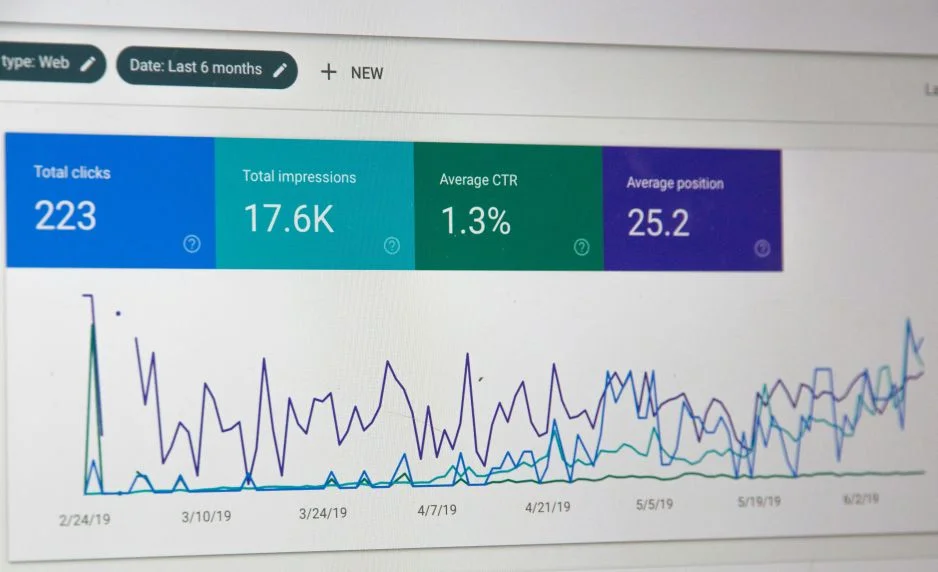
One of the most straightforward approaches is to use Google Search Console. Head into the Performance report and look at which queries are driving impressions and clicks. If you notice that multiple URLs are appearing for the same query at different points in time, or if you see a keyword performing inconsistently, that is a strong signal that cannibalisation may be at play.
Want more insights like this?
Join thousands of marketers getting weekly tips and strategies.
You can also perform a site search directly in Google by typing site:yourdomain.com "keyword phrase" into the search bar. If multiple pages come back targeting that same phrase, you have identified a cannibalisation issue worth investigating further.
Tools like SEMrush and Ahrefs both offer cannibalisation tracking features that can map out which pages are competing for the same keywords across your entire site. These are particularly useful for larger websites where a manual review would take far too long.
The Impact On Your SEO Performance
It is worth understanding exactly what is at stake here, because some website owners treat keyword cannibalisation as a minor inconvenience rather than the genuine ranking obstacle it actually is. When your pages compete against each other, you are effectively diluting your own authority. The backlinks, internal links, and engagement signals that should be concentrated on one strong page are instead spread thinly across several weaker ones.
Google's algorithms are designed to serve users the single most relevant result for a given query. When your site presents multiple pages that appear to answer the same question, search engines face an unnecessary decision. Sometimes they will rank the wrong page, perhaps an older, thinner piece of content rather than the comprehensive guide you spent weeks crafting. In other cases, both pages rank lower than either would on its own, simply because the signals are divided.
How To Fix Keyword Cannibalisation
Once you have identified which pages are cannibalising each other, you have a few different routes to resolution, and the right choice depends on the nature of the content involved.
Consolidate Your Content
If two pages cover the same topic and neither is substantially different from the other, the most effective fix is to merge them into a single, stronger piece of content. Take the best elements from both, combine them into one authoritative page, and redirect the weaker URL to the one you are keeping. This is particularly effective for blog posts that have covered the same subject at different points in time. The combined page will typically outperform either of the originals because it carries more depth, more internal links pointing to it, and a clearer signal to search engines about what it covers.
Use 301 Redirects
When one page is clearly stronger than the other, whether in terms of backlinks, traffic, or content quality, setting up a 301 redirect from the weaker page to the stronger one is a clean and efficient solution. This passes the ranking signals from the old URL to the new one and removes the conflict entirely. It is one of the most commonly used fixes in technical SEO and, when applied correctly, it works well.
Implement Canonical Tags
In situations where you need to keep both pages live but want to tell search engines which one should be treated as the primary version, a canonical tag is the appropriate tool. By adding a rel="canonical" tag to the secondary page pointing to the primary one, you are signalling to Google which URL should receive the ranking credit. This approach is often used for e-commerce sites where product variations or filtered category pages create near-duplicate content across multiple URLs.
Revisit Your Internal Linking
Internal linking plays a bigger role in cannibalisation than many people realise. If you have multiple pages targeting the same keyword and your internal links are pointing to different ones inconsistently, you are sending mixed signals to search engines. Audit your internal links and make sure that when you mention a particular topic across your site, you are consistently linking to the one page you want to rank for that keyword. This reinforces the hierarchy of your content and helps Google understand which page carries the most authority on a given subject.
Rethink Your Keyword Targeting Strategy
Sometimes the fix is not just about what already exists on your site, it is about how you plan content going forward. If you do not have a clear keyword map in place, where each target keyword is assigned to one specific page, you will keep running into cannibalisation as your site grows. Building a keyword mapping document, even a simple spreadsheet that lists your target keywords alongside the pages assigned to them, will prevent the problem from recurring and give your content strategy a much cleaner foundation to build on.
Keeping On Top Of It Long Term
Keyword cannibalisation is not a one-time fix. As your site grows and your content library expands, new conflicts will emerge. Building regular content audits into your SEO workflow is the most reliable way to stay ahead of it. Whether you do this quarterly or biannually will depend on how frequently you publish, but the principle remains the same: review what you have, check for conflicts, and resolve them before they drag your rankings down.
Understanding what keyword cannibalisation is and how you fix it is one of those SEO fundamentals that does not always get the attention it deserves. But for websites that are serious about organic performance, getting this right makes a real difference. Fewer competing signals, stronger pages, and a cleaner site architecture all work together to give your content the best possible chance of ranking where it deserves to be.
Ian
Ian has worked in Digital Marketing for decades, and is a Google Partner for Google Ads and an expert in onsite and technical SEO. He has worked with hundreds of clients, helping them achieve success online, through SEO, PPC and Digital Marketing, working with local businesses through to national retailers.
View all posts →Related Articles

Why Rankings Are A Poor Way To Measure Your SEO Campaign Success Rate
Too many people still rely on the tracking of keywords to rate their campaign, which as we go onto discuss, is not the best way of judging the success and effectiveness of your campaign.

The Link Building Mistakes That Will Catch You In The End
Links are still a fundamental part of SEO and improving rankings in the search engines and even though more emphasis than ever has been placed on how good and optimised your website is, link building is simply something that cannot be overlooked if you want long term success.
Why CRO Is Now As Important For SEO Than Ever Before
For years, the digital marketing world treated conversion rate optimisation (CRO) and search engine optimisation (SEO) as separate disciplines. SEO focused on driving traffic, CRO focused on convertin...