
How To Find Out Who Is Visiting Your Website
One of the most common frustrations for business owners and marketers alike is knowing that people are landing on their website, but having absolutely no idea who those people actually...
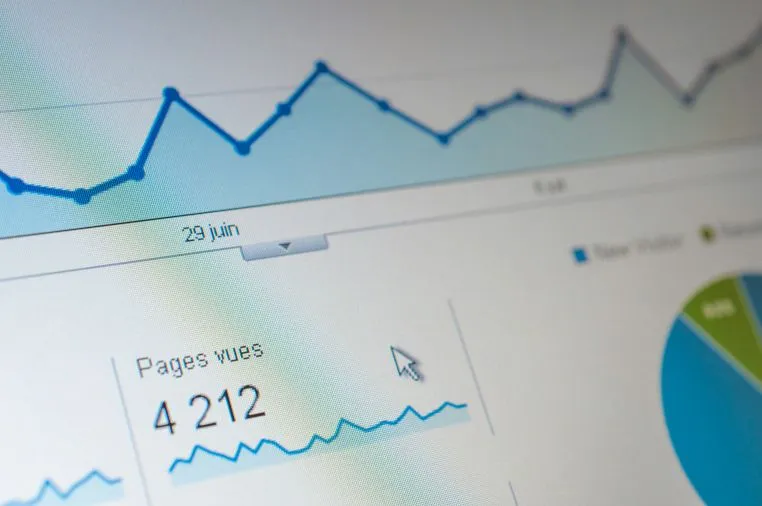
One of the most common frustrations for business owners and marketers alike is knowing that people are landing on their website, but having absolutely no idea who those people actually are. You can see the traffic numbers in your analytics platform, the sessions, the page views, the bounce rates, but behind all of those figures are real people, real businesses, and potentially real customers. The good news is that there are several ways to start lifting that veil and getting a much clearer picture of who is visiting your website, what they are interested in, and how you can turn that knowledge into genuine commercial opportunity.
Why Knowing Your Website Visitors Matters
Understanding who is visiting your website is not simply a vanity exercise. It is one of the most commercially valuable things you can do as a marketer or business owner. If you are investing in paid advertising, content marketing, or search engine optimisation, then knowing who is responding to those efforts allows you to refine your targeting, improve your messaging, and ultimately spend your budget more wisely. Without that insight, you are effectively guessing, and guessing in digital marketing tends to be an expensive habit.
There is also a very practical sales angle to this. If you run a B2B business, for example, knowing that a specific type of company is repeatedly landing on your pricing page or your services section is incredibly useful intelligence. It can inform your outreach strategy, your content planning, and even your product development. So the question of how to find out who is visiting your website is one that deserves a proper, thorough answer.
Google Analytics and What It Can Tell You
The starting point for most website owners is Google Analytics, and for good reason. It is free, it is powerful, and when set up correctly, it gives you a substantial amount of data about your audience. Within Google Analytics 4, the Audience section allows you to explore demographic information including age ranges, gender, geographic location, device type, and even broad interest categories based on browsing behaviour.
Whilst Google Analytics does not reveal the names or contact details of individual visitors, it does give you a strong sense of the audience profile that your website is attracting. If you discover that the majority of your traffic is coming from a particular city, industry sector, or age group that does not align with your target customer, that is a signal worth acting on. Understanding the gap between who is visiting and who you want to be visiting is a powerful starting point for refining your entire digital strategy.
Want more insights like this?
Join thousands of marketers getting weekly tips and strategies.
IP Lookup and Business Identification Tools
For businesses operating in the B2B space, there is a category of tools specifically designed to identify the companies behind website visits. Platforms such as Leadfeeder, Albacross, and Clearbit work by cross-referencing the IP addresses of your website visitors against company databases, allowing you to see which organisations are browsing your site, how long they spent there, and which pages they viewed.
This kind of intelligence is particularly valuable for sales teams. If a well-known company in your target sector visits your pricing page three times in a week without making contact, that is a warm signal that your sales team can follow up on with confidence. These tools do not identify individual people by name, but they do identify the company, and in a B2B context, that is often all the information you need to initiate a relevant and timely conversation.
It is worth noting that these tools operate within GDPR guidelines by working at a company level rather than identifying individual users. If you are operating within the UK or European market, you should always ensure that any tool you use is compliant with current data protection regulations, and that your own privacy policy reflects the tracking technologies you have in place on your site.
Using Heatmaps and Behaviour Analytics
Tools like Hotjar and Microsoft Clarity take a slightly different approach. Rather than telling you who a visitor is in terms of their name or company, they show you how visitors are behaving on your site. Heatmaps reveal where people are clicking, how far they are scrolling, and which elements of a page are attracting the most attention.
This behavioural data is enormously useful when you are trying to understand your audience because it tells you what they care about. If visitors are consistently dropping off before reaching your contact form, or if they are clicking on elements that are not actually links, those are clear signals about where your user experience is letting you down. Understanding behaviour is a significant step towards understanding your audience as a whole.
Email Marketing and Lead Capture
One of the most direct ways to find out who is visiting your website is to give people a compelling reason to identify themselves. This is where email marketing and lead capture become genuinely important. By offering something of value, whether that is a downloadable guide, a free consultation, an exclusive newsletter, or access to gated content, you create an opportunity for visitors to voluntarily share their contact details with you.
Once someone submits their email address and name, they move from being an anonymous visitor to a known contact. Platforms like Mailchimp, ActiveCampaign, and HubSpot allow you to track that contact's subsequent behaviour on your site, including the pages they visit, the emails they open, and the content they engage with. Over time, this builds a rich profile that helps you understand not just who they are, but what they are looking for and where they are in their buying journey.
CRM Integration and Tracking
If you are already using a CRM system, integrating it with your website tracking is a logical and highly effective step. When a known contact visits your website, a CRM with website tracking capabilities can log that visit and alert the relevant member of your team. This means that if a prospect you have been in conversation with suddenly starts reading your case studies or returns to your product pages, your sales team knows about it in real time.
This level of insight transforms the way businesses can approach their follow-up communications. Instead of sending generic, untargeted messages, your team can reach out with context and relevance, referencing the specific areas of interest that the contact has demonstrated through their browsing behaviour.
Bringing It All Together
Knowing how to find out who is visiting your website is not about relying on a single tool or tactic. The most effective approach combines behavioural analytics, company identification tools, lead capture strategies, and CRM integration to build a layered and increasingly detailed picture of your audience. Each layer adds context, and with enough context, anonymous website traffic starts to become something far more useful: a pipeline of identifiable, qualified prospects that your marketing and sales teams can engage with meaningfully. Start with the tools you do not yet have in place, build your lead capture strategy with genuine value in mind, and make sure your data practices remain compliant at every step.
Ian
Ian has worked in Digital Marketing for decades, and is a Google Partner for Google Ads and an expert in onsite and technical SEO. He has worked with hundreds of clients, helping them achieve success online, through SEO, PPC and Digital Marketing, working with local businesses through to national retailers.
View all posts →Related Articles

Where To List Your Products For Sale To Gain More Customers
In today's competitive digital landscape, knowing where to list your products for sale to gain more customers can make the difference between a thriving business and one that struggles to find its aud...

Is Digital Marketing A Good Career
There are very few industries that have transformed as rapidly as digital marketing, and when it comes to career opportunities, I am a true believer that digital marketing offers one of the most dynam...

Is GA4 Really That Much Of An Improvement On The Previous Google Analytics
Google Analytics 4 has been with us for a while now, and yet the question still lingers in many marketers' minds: is GA4 really that much of an improvement on the previous Google Analytics? Having wor...