
Top 5 AI Writing Tools For Marketers
If you work in digital marketing, you will already know that the pressure to produce high-quality content, consistently and at speed, is not letting up any time soon. Clients want more blog posts, mor...
If you work in digital marketing, you will already know that the pressure to produce high-quality content, consistently and at speed, is not letting up any time soon. Clients want more blog posts, more ad copy, more email sequences, more social content, and they want it all done yesterday. This is precisely where AI writing tools have moved from being a curiosity to becoming a genuine part of a marketer's day-to-day workflow. The market for these tools has exploded over the last couple of years, and with so many options now available, it can be genuinely difficult to know which ones are actually worth your time and money, and which ones are simply riding the wave of hype. This guide cuts through the noise and looks at five of the best AI writing tools available to marketers right now, what they do well, where their limitations lie, and how to get the most out of them.
Why AI Writing Tools Have Become Essential For Modern Marketers
There is still a school of thought that AI writing tools will replace human writers entirely, but in practice, the marketers getting the best results are the ones using these tools to amplify their own output rather than replace their thinking. Think of them as a highly capable assistant who can handle the heavy lifting of first drafts, ideation, reformatting and variation, leaving you free to focus on strategy, tone refinement and the kind of nuanced creativity that still requires a human touch. The top AI writing tools for marketers are not designed to remove expertise from the equation; they are designed to make that expertise go further.
ChatGPT by OpenAI
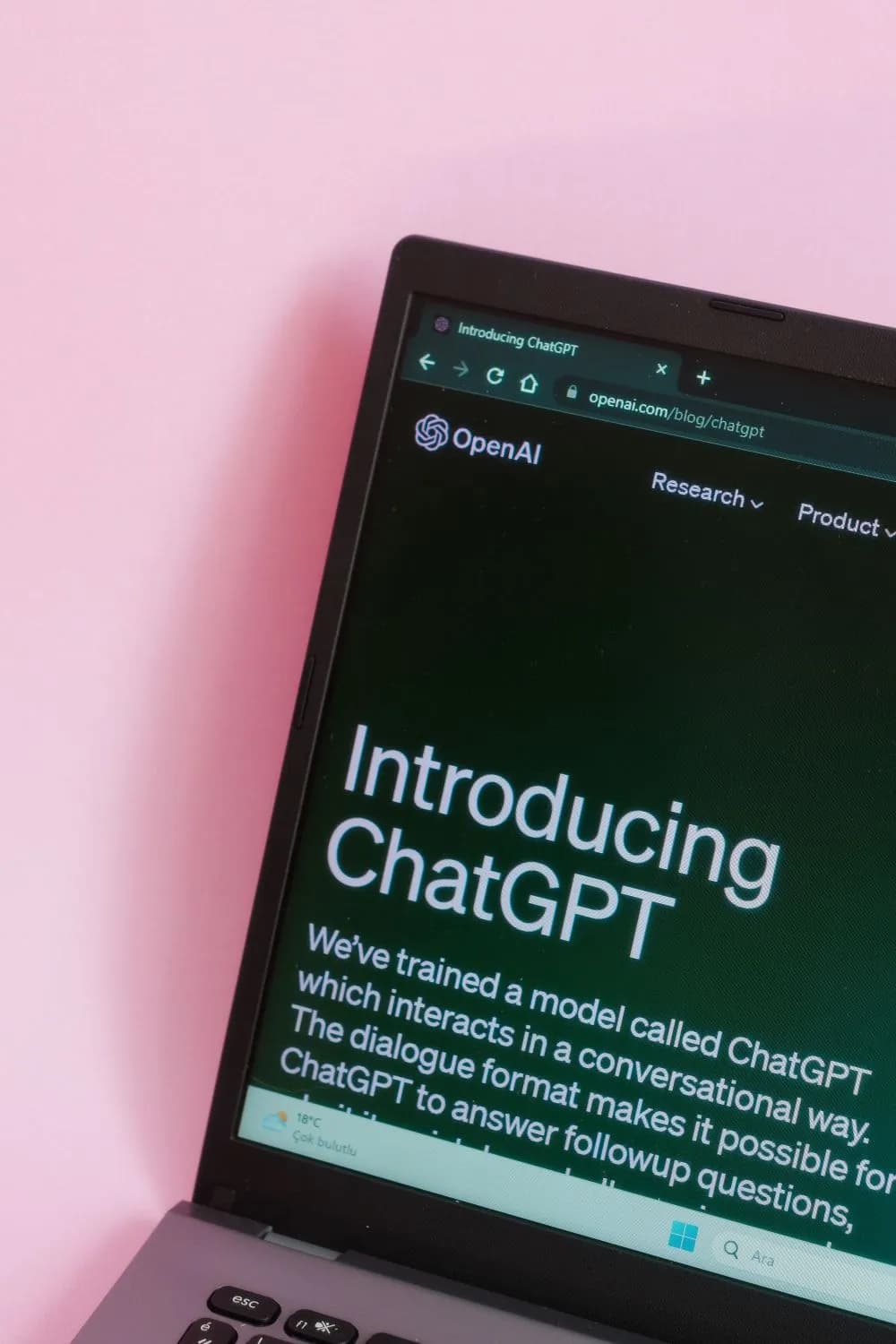
It would be almost impossible to write a guide like this without starting here. ChatGPT has become arguably the most widely used AI tool across virtually every industry, and for good reason. Its versatility is genuinely impressive. As a marketer, you can use it to draft long-form blog content, write product descriptions, brainstorm campaign concepts, create email sequences, or even work through strategic challenges by using it as a sounding board.
Where ChatGPT particularly stands out is in its conversational approach. You can iterate rapidly, refining outputs by giving follow-up instructions in plain language. If a draft feels too formal, you tell it. If you need a version tailored for a different audience, you ask. The GPT-4o model, available through ChatGPT Plus, handles more complex and nuanced tasks considerably better than the free tier, so if you are using this professionally, the paid subscription is well worth considering.
The limitation to be aware of is that ChatGPT's knowledge has a training cutoff, meaning it does not have real-time awareness of current events or the very latest industry developments unless you use its browsing capabilities. For evergreen content and campaign copy, this rarely matters. For highly time-sensitive material, you will need to factor in your own up-to-date knowledge and source material.
Best used for: Long-form content drafting, ideation, email marketing copy, and iterative creative work across a wide range of marketing formats.
Jasper
Jasper has been built with marketers specifically in mind, and that focus shows throughout the platform. Unlike a general-purpose AI, Jasper offers a library of templates designed around common marketing use cases, from Facebook ad copy and landing page content through to product descriptions and blog post outlines. This makes it particularly accessible for marketing teams who want to get up and running quickly without having to engineer elaborate prompts from scratch.
One of Jasper's more useful features is its Brand Voice capability, which allows you to train the tool on your existing content so that outputs align more closely with your established tone and style. For agencies managing multiple clients, or for in-house teams with a carefully defined brand identity, this is a meaningful advantage. It does not entirely remove the need for human editing, but it does significantly reduce the amount of correction required after the first draft.
Want more insights like this?
Join thousands of marketers getting weekly tips and strategies.
Jasper integrates with Surfer SEO, which is a notable bonus if search engine optimisation is a significant part of your content strategy. The combination allows you to produce content that is not only readable but also structured around relevant keyword targets and topical authority signals.
Best used for: Marketing teams and agencies needing templated, brand-consistent content at scale across paid and organic channels.
Copy.ai
Copy.ai positions itself as a go-to-market AI platform, and for marketers who are regularly producing short-form copy across multiple formats, it is a very capable tool. Where it particularly shines is in speed. You can produce multiple variations of ad headlines, email subject lines, call-to-action text and social media captions in a matter of minutes, which makes it extremely valuable when you are running A/B tests or need to supply a volume of creative options to a client for review.
The workflow builder within Copy.ai is worth exploring if your team handles repetitive content production tasks. You can essentially automate multi-step content processes, which is particularly useful for things like producing a consistent flow of LinkedIn posts or generating product listing content for e-commerce clients working with large catalogues.
It is fair to say that Copy.ai's strength lies more in short-form versatility than in producing polished long-form content. For longer pieces, you are likely to find that it needs more hands-on guidance and editing than some of the other tools on this list. But for what it does well, it does it efficiently and the interface is clean and relatively intuitive even for those who are newer to AI writing tools.
Best used for: High-volume short-form copy production, A/B testing creative variations, and automating repetitive content workflows.
Writesonic
Writesonic is a tool that has matured considerably and now offers a genuinely well-rounded set of features for marketers who need content that performs in search as well as engages readers. Its AI Article Writer is capable of producing structured long-form content, and it includes a real-time data access feature that allows it to pull in current information when generating articles, which addresses one of the more common frustrations with AI writing tools in general.
Writesonic also includes Chatsonic, which is a conversational AI assistant with real-time web access, making it particularly useful for marketers who need to stay current with industry developments and incorporate that into their content planning. The platform covers a wide range of content types from landing pages and Google Ads copy to blog posts and product descriptions, giving you a single environment to work across multiple content needs.
Pricing is structured around word credits, which means it is worth taking a careful look at your monthly content volumes before committing to a plan. For agencies or freelancers with high output demands, the higher-tier plans are likely to offer better value, whereas smaller teams may find a mid-tier option perfectly sufficient.
Best used for: SEO-focused long-form content, marketers who need real-time data integrated into their writing, and teams managing a broad mix of content formats.
Notion AI
Whilst Notion AI may not be the first name that springs to mind when thinking about dedicated AI writing tools for marketers, its integration within the Notion workspace makes it an exceptionally practical option for teams who already use Notion to plan and manage their projects. The ability to generate, summarise, edit and brainstorm content directly within the same environment where your content calendar, briefs and approvals all live is a significant efficiency gain.
For content marketing teams in particular, Notion AI removes a lot of the friction that comes from switching between multiple tools. You can take a rough content brief and ask Notion AI to expand it into a full draft without ever leaving your workspace. You can summarise research notes, rewrite sections for clarity, or generate a set of headline options, all within the context of a document that already contains your key messaging and objectives.
It is worth being clear that Notion AI is not as feature-rich as a purpose-built platform like Jasper when it comes to marketing-specific templates or SEO integrations. But as an embedded productivity tool for teams who need smart writing assistance without the overhead of learning a separate platform, it is genuinely hard to argue against.
Best used for: Content marketing teams already working within Notion who want AI writing assistance embedded directly into their planning and production workflow.
Choosing The Right Tool For Your Marketing Needs
The honest answer is that there is no single best AI writing tool for every marketer, because the right choice depends entirely on how you work, what you produce and the scale at which you operate. A solo freelance copywriter has very different needs from a content team inside a large agency, and the tool that suits one will not necessarily suit the other.
What is worth remembering across all of these platforms is that AI writing tools are exactly that: tools. They produce outputs based on the inputs and direction you provide, which means the quality of what comes out is closely connected to the clarity and expertise you bring to the process. A marketer who understands their audience, knows what good copy looks like and can give clear, informed instructions will always get more from these tools than someone who treats them as a shortcut around the need to think.
Take the time to explore the free trials that most of these platforms offer before committing to a subscription. Run each one against your actual content tasks rather than generic tests, and pay attention not just to the quality of the first draft but to how easily and quickly you can shape the output into something genuinely usable. That refinement process is where the real time saving happens, and it is where the differences between these tools become most apparent in practice.
The marketers who will get the most from AI writing tools are those who embrace them as a genuine part of their creative process, rather than treating them with suspicion or expecting them to do everything without guidance. Used well, these tools can meaningfully increase your capacity, improve your consistency and give you more time to focus on the strategic and creative work that makes the real difference to your clients and your results.
Ian
Ian has worked in Digital Marketing for decades, and is a Google Partner for Google Ads and an expert in onsite and technical SEO. He has worked with hundreds of clients, helping them achieve success online, through SEO, PPC and Digital Marketing, working with local businesses through to national retailers.
View all posts →Related Articles

Where To List Your Products For Sale To Gain More Customers
In today's competitive digital landscape, knowing where to list your products for sale to gain more customers can make the difference between a thriving business and one that struggles to find its aud...

Is Digital Marketing A Good Career
There are very few industries that have transformed as rapidly as digital marketing, and when it comes to career opportunities, I am a true believer that digital marketing offers one of the most dynam...

Is GA4 Really That Much Of An Improvement On The Previous Google Analytics
Google Analytics 4 has been with us for a while now, and yet the question still lingers in many marketers' minds: is GA4 really that much of an improvement on the previous Google Analytics? Having wor...