
What Is Average Order Value And How To Increase It
Average order value is one of those metrics that sits quietly in the background of your analytics dashboard, often overlooked in favour of traffic numbers or conversion rates, yet it h...

Average order value is one of those metrics that sits quietly in the background of your analytics dashboard, often overlooked in favour of traffic numbers or conversion rates, yet it has a profound impact on the overall revenue your business generates without requiring you to attract a single additional visitor. If you are running an e-commerce store, a subscription-based service, or even a local retail operation with an online presence, understanding what average order value is and how to increase it should be central to your growth strategy.
What Is Average Order Value?
Average order value, commonly referred to as AOV, is the average amount of money a customer spends each time they place an order with your business. The calculation itself is straightforward: take your total revenue over a given period and divide it by the total number of orders placed in that same period. So if your store generated £50,000 in revenue from 1,000 orders in a month, your average order value for that period would be £50.
The reason this metric matters so much is that it directly influences your revenue per customer interaction. Rather than constantly chasing new customers through paid advertising or organic search, improving your AOV means you are extracting more value from the customers you already have. When you factor in the cost of acquiring a new customer, which is almost always higher than the cost of retaining or upselling an existing one, the case for focusing on average order value becomes even more compelling.
Tracking your AOV over time also gives you a clearer picture of buying behaviour and helps you understand whether your pricing strategies, product bundling, or promotional activity is resonating with your audience. Tools like Google Analytics 4 and platforms such as Shopify make it straightforward to monitor this figure across different time periods, channels, and customer segments.
Product Bundling and Cross-Selling
One of the most natural and effective ways to increase average order value is through product bundling and cross-selling. Bundling involves grouping complementary products together and offering them as a package, often at a slight discount compared to purchasing each item individually. This gives the customer a sense of added value whilst increasing the total spend per transaction.
Cross-selling works in a similar way but happens at the point of browsing or purchase. If someone adds a laptop to their basket, suggesting a compatible laptop bag, a wireless mouse, or a screen protector is a logical and helpful next step. The customer gets a more complete solution, and you increase the value of that transaction without the need for a hard sell.
The key to making this work is relevance. Recommending products that genuinely complement the original purchase feels helpful rather than intrusive. Platforms like Klaviyo and built-in e-commerce recommendation engines allow you to automate these suggestions based on browsing history, purchase behaviour, and popular pairings across your product catalogue.
Free Shipping Thresholds
Want more insights like this?
Join thousands of marketers getting weekly tips and strategies.
Setting a free shipping threshold is one of the simplest yet most consistently effective strategies for increasing average order value. The logic is straightforward: if a customer is spending £35 and free shipping kicks in at £50, there is a strong incentive for them to add another item to their basket to reach that threshold rather than pay a delivery fee.
The important part is setting the threshold at the right level. If your current average order value is £40, setting the free shipping threshold at £42 is unlikely to move the needle significantly. Setting it too high, say at £100, may feel unachievable and put customers off entirely. Positioning it around 20 to 30 per cent above your current AOV tends to be the sweet spot, creating enough of a motivational gap to encourage additional spending without feeling out of reach.
Communicating this threshold clearly throughout the shopping experience matters enormously. A simple message in the basket that reads something like "You're only £12 away from free delivery" can be surprisingly powerful in nudging customers towards that additional purchase.
Upselling at the Right Moment
Upselling is often confused with cross-selling, but the distinction is important. Where cross-selling introduces complementary products, upselling encourages a customer to consider a higher-value version of what they are already looking at. If someone is viewing a mid-range camera, presenting the premium model with enhanced features and a marginal price difference is an upsell.
Timing is everything here. Upselling works best when it happens before the customer has fully committed to their choice, which is typically on the product page rather than in the checkout. Once someone is in the checkout process, the priority should be removing friction and completing the transaction, not introducing alternatives that might cause hesitation.
Good upselling also requires solid copywriting. The focus should be on the added value the upgraded product delivers, not simply the higher price point. Highlighting what the customer gains by spending a little more, whether that is better build quality, extended warranty, or additional features, makes the decision feel worthwhile rather than extravagant.
Loyalty Programmes and Spend-Based Rewards
Loyalty programmes, when built around spending tiers rather than purely visit frequency, can be a powerful driver of higher average order values. When customers know that spending above a certain amount unlocks a reward, a discount on their next purchase, early access to a new collection, or a free gift, they are more likely to consolidate purchases into a single larger order rather than making multiple smaller ones.
Platforms such as Smile.io and Yotpo offer robust loyalty programme integrations for e-commerce businesses that allow you to create tiered reward structures without significant technical overhead. The data these platforms collect also gives you valuable insight into which reward types are most effective at influencing spending behaviour across different customer segments.
Personalisation and Tailored Offers
Broad, blanket promotions have their place, but personalised offers based on a customer's purchase history and browsing behaviour tend to deliver far stronger results when it comes to increasing average order value. A customer who regularly buys premium skincare products is far more likely to respond to a curated bundle of high-end items than a generic site-wide discount that applies to products they have never shown interest in.
Personalisation at scale is more accessible than ever thanks to the range of tools available to e-commerce and digital businesses. Email platforms, on-site recommendation engines, and CRM systems can all be used in combination to deliver tailored experiences that feel relevant to the individual rather than mass-produced. The more relevant the offer, the more likely a customer is to act on it and to act on it generously.
Limited-Time Offers and Value-Added Promotions
Creating a sense of urgency through limited-time offers can be an effective way to encourage customers to increase their basket size in the moment rather than returning later for a smaller, more considered purchase. This does not mean resorting to artificial countdown timers or pressure tactics that damage trust. Instead, think about genuinely time-sensitive promotions such as a gift with purchase available only over a specific weekend, or a complimentary product added to orders above a certain value during a product launch window.
Value-added promotions tend to perform better than straight discounts when the goal is increasing average order value, because they encourage spending more rather than spending the same for less. A free sample set added to orders over £60 gives the customer a tangible reason to spend more, whereas a 10 per cent discount on everything simply reduces the revenue per transaction without necessarily encouraging a larger basket.
Reviewing Your Product and Pricing Architecture
Sometimes the most effective way to increase average order value is to revisit your product range and pricing structure. Are there logical gaps in your offering where a premium tier or an add-on product would make sense? Is your pricing clearly structured so that customers can see the value of spending a little more for a meaningfully better option? Are your most valuable products visible and accessible, or buried within categories that customers rarely browse?
A thorough review of your product and pricing architecture, informed by your sales data and customer feedback, often reveals opportunities that are far simpler to act on than any promotional campaign. Small adjustments to how products are presented, priced, and positioned can have a lasting impact on the average amount customers spend with you.
Putting It All Together
Increasing your average order value is not about a single tactic applied in isolation. It is about creating an experience where customers naturally and comfortably spend more because they can see the value in doing so. From well-placed product recommendations and intelligently set free shipping thresholds through to personalised offers and a clear pricing structure, the most successful approaches work in concert rather than independently. Start by establishing a clear baseline for your current AOV, identify the strategies most aligned with your business model and customer behaviour, and test your changes methodically so you can measure what is genuinely moving the needle. The revenue impact of even a modest improvement in average order value, compounded across thousands of transactions, can be significant without any increase in your marketing spend.
Ian
Ian has worked in Digital Marketing for decades, and is a Google Partner for Google Ads and an expert in onsite and technical SEO. He has worked with hundreds of clients, helping them achieve success online, through SEO, PPC and Digital Marketing, working with local businesses through to national retailers.
View all posts →Related Articles

Where To List Your Products For Sale To Gain More Customers
In today's competitive digital landscape, knowing where to list your products for sale to gain more customers can make the difference between a thriving business and one that struggles to find its aud...

Is Digital Marketing A Good Career
There are very few industries that have transformed as rapidly as digital marketing, and when it comes to career opportunities, I am a true believer that digital marketing offers one of the most dynam...
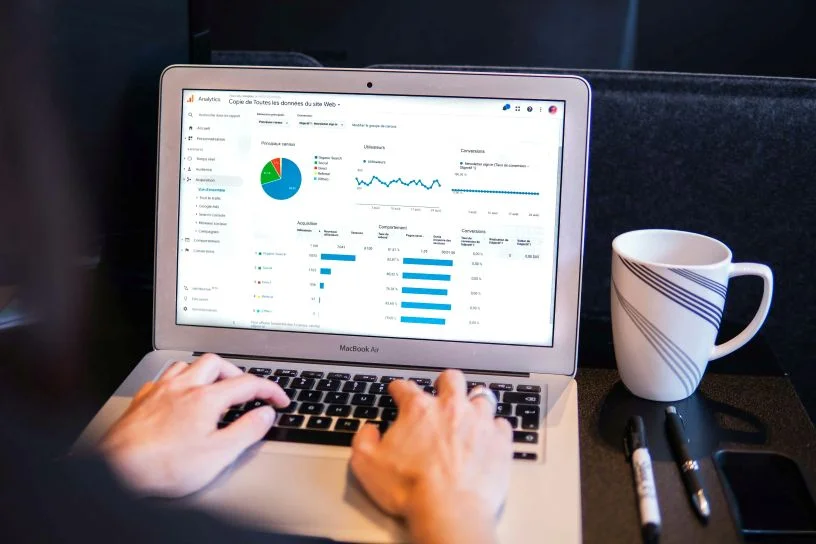
Is GA4 Really That Much Of An Improvement On The Previous Google Analytics
Google Analytics 4 has been with us for a while now, and yet the question still lingers in many marketers' minds: is GA4 really that much of an improvement on the previous Google Analytics? Having wor...