
How To Find Content Ideas Your Customers Are Actually Searching For
One of the most common frustrations in content marketing is putting real time and effort into creating articles, guides, and blog posts, only to find that nobody is reading them. The traffic does not...

One of the most common frustrations in content marketing is putting real time and effort into creating articles, guides, and blog posts, only to find that nobody is reading them. The traffic does not come, the enquiries do not follow, and the content sits there quietly gathering digital dust. In most cases, the problem is not the quality of the writing. It is that the content was never built around what real people are actually searching for in the first place. Understanding how to find content ideas your customers are actually searching for is one of the most valuable skills you can develop as a business owner or marketer, and it is something that, when done properly, transforms your entire content strategy from guesswork into something far more purposeful and effective.
Start With Google Search Console
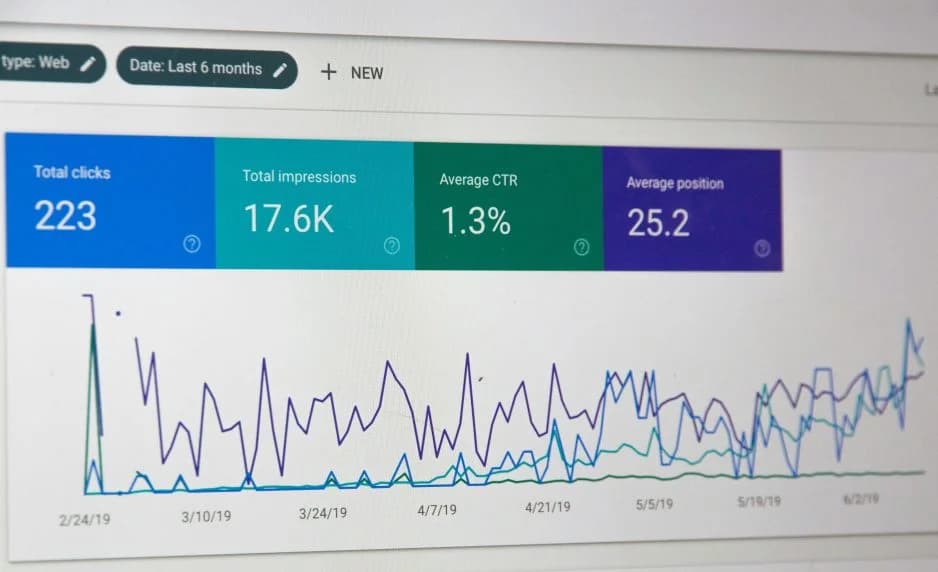
If you are not already using Google Search Console, then you are missing one of the most direct windows into what your audience is already searching for. Within the Performance report, you can see the exact search queries that are bringing people to your website, which pages those queries are landing on, and how often your pages are appearing in search results without being clicked. That last point is particularly important. A page that appears frequently but receives very few clicks is often telling you something about either the title, the meta description, or the alignment between the content and what the searcher actually wanted to find.
Beyond your own existing data, Search Console can highlight gaps. If people are finding a particular page using a question-based query that your content does not fully answer, that is a clear signal that a new, more focused piece of content is needed. The data is already there, sitting in your account, waiting to be used.
Use Google's Own Search Results as a Research Tool
Google itself is one of the most underrated keyword research tools available, and it costs nothing to use. When you begin typing a search query into Google, the autocomplete suggestions that appear are drawn from real search behaviour. These are not invented phrases. They reflect what people are genuinely typing into the search bar on a daily basis. Start with a broad topic relevant to your business and pay close attention to what Google suggests as you type.
Once you have run a search, scroll to the bottom of the results page and you will find the "related searches" section. This gives you a further set of phrases that people commonly search for in connection with your original query. Somewhere between the autocomplete suggestions, the related searches, and the "People also ask" box that often appears mid-page, you have a rich set of real search intent data that can inform an entire content calendar without spending a penny on a tool.
The "People also ask" feature deserves particular attention. Each question in that box represents a genuine information need. If your content answers those questions in a clear and authoritative way, you stand a strong chance of appearing directly within those results, which significantly increases your visibility.
Want more insights like this?
Join thousands of marketers getting weekly tips and strategies.
Invest Time in a Dedicated Keyword Research Tool
Whilst free methods are valuable, a dedicated keyword research tool gives you a level of depth and volume data that Google's own surfaces simply cannot match. Platforms such as Ahrefs, SEMrush, and Moz allow you to enter a seed keyword and receive back hundreds of related search terms, complete with estimated monthly search volumes, keyword difficulty scores, and the types of pages that are currently ranking for each term.
What you are looking for when using these tools is not necessarily the highest-volume keywords. In fact, for most businesses, especially those in competitive markets, the most valuable content opportunities often sit in what is referred to as long-tail keywords. These are more specific, lower-volume search phrases that indicate a much clearer intent from the person searching. Someone typing "running shoes" could be looking for anything. Someone typing "best running shoes for flat feet under fifty pounds" knows exactly what they want, and a piece of content that addresses that specific need has a far higher chance of both ranking and converting.
Listen to Your Customers Directly
No algorithm or tool can replicate the insight you gain from simply paying attention to the questions your customers ask you in real life. The emails your support team receives, the questions that come up repeatedly on sales calls, the comments left on your social media posts, and the queries submitted through your website contact form are all content ideas waiting to be developed. If one customer is asking a question, it is almost certain that many others are searching for the same answer online without picking up the phone.
Building a simple system for capturing these questions, whether that is a shared document, a note in your CRM, or a regular conversation with whoever handles customer enquiries, gives you a constant pipeline of content ideas that are rooted in genuine customer need rather than assumptions about what people might want to know.
Analyse What Your Competitors Are Ranking For
Understanding the content landscape in your market means looking at what is already working for others. Using a tool like Ahrefs or SEMrush, you can enter a competitor's domain and see which of their pages are driving the most organic traffic, and more importantly, which keywords those pages are ranking for. This is not about copying what they have done. It is about identifying the topics and questions that are proven to attract search traffic in your niche, and then creating something more thorough, more useful, or more targeted than what already exists.
Pay particular attention to content gaps, topics where several competitors are ranking but you have no content at all. These represent clear opportunities where your audience is clearly looking for information and you are currently absent from the conversation entirely.
Explore Community Platforms and Forums
Platforms like Reddit and Quora are enormously useful for content research because they reflect real conversations happening between real people. Search for topics related to your industry on either platform and you will quickly find threads where people are asking detailed questions, sharing frustrations, and looking for recommendations. The language people use in these discussions is also worth noting, because it often differs from the polished terminology a brand might use, and aligning your content language with how real people actually speak tends to improve both relevance and readability.
Industry-specific forums and community groups on platforms like LinkedIn and Facebook can serve the same purpose. The goal is to find where your audience congregates online and listen carefully to what they are talking about.
Build a Content Calendar Around Search Intent
Finding the right content ideas is only part of the equation. Organising them into a structured content calendar ensures that you are consistently publishing material that serves different stages of the customer journey. Some searches are informational, the person wants to learn something. Others are navigational or transactional, the person is closer to making a decision. A well-balanced content strategy addresses all of these needs rather than focusing exclusively on one type.
When you map your content ideas against the intent behind each search, you create a resource that genuinely serves your audience from the moment they first become aware of a problem through to the point where they are ready to take action. That alignment between content and intent is ultimately what separates a strategy that generates real results from one that simply fills a website with words.
Turning Research Into Results
The process of finding content ideas your customers are actually searching for is not a one-time exercise. Search behaviour evolves, new questions emerge, and your audience's needs shift over time. Building regular research into your content planning routine, whether that is monthly or quarterly, keeps your strategy current and ensures that the effort you invest in creating content is always pointed in the right direction.
The businesses that consistently attract organic traffic and turn that traffic into meaningful engagement are rarely the ones with the biggest budgets. They are the ones who took the time to understand what their customers genuinely needed to know, and then built their content around those needs with clarity and purpose. That is a standard any business can achieve, and it starts with the research.
Ian
Ian has worked in Digital Marketing for decades, and is a Google Partner for Google Ads and an expert in onsite and technical SEO. He has worked with hundreds of clients, helping them achieve success online, through SEO, PPC and Digital Marketing, working with local businesses through to national retailers.
View all posts →Related Articles

Why Rankings Are A Poor Way To Measure Your SEO Campaign Success Rate
Too many people still rely on the tracking of keywords to rate their campaign, which as we go onto discuss, is not the best way of judging the success and effectiveness of your campaign.

The Link Building Mistakes That Will Catch You In The End
Links are still a fundamental part of SEO and improving rankings in the search engines and even though more emphasis than ever has been placed on how good and optimised your website is, link building is simply something that cannot be overlooked if you want long term success.
Why CRO Is Now As Important For SEO Than Ever Before
For years, the digital marketing world treated conversion rate optimisation (CRO) and search engine optimisation (SEO) as separate disciplines. SEO focused on driving traffic, CRO focused on convertin...