
How To Find The Keywords You Already Rank For And Push Them Higher
One of the most overlooked opportunities in SEO is sitting right underneath your nose. The keywords you already rank for, particularly those hovering between positions four and twenty,...

One of the most overlooked opportunities in SEO is sitting right underneath your nose. The keywords you already rank for, particularly those hovering between positions four and twenty, represent some of the most valuable and achievable growth available to any website. Rather than starting from scratch and chasing brand new terms in competitive spaces, learning how to find the keywords you already rank for and push them higher is a far more efficient use of your time, your budget, and your effort. It is the kind of strategy that rewards patience and precision, and when done well, it can produce meaningful improvements in organic traffic without the need for an enormous outlay of resource.
Why Existing Rankings Are Your Greatest Asset
When your website already appears on page one or two of Google for a given search term, you have already done a significant amount of the hard work. Google has seen your content, evaluated it, and decided it is relevant enough to serve to real users. The challenge at that point is not whether you deserve to rank, but whether your page is doing enough to deserve a higher position than it currently holds.
Many businesses and website owners spend all of their time and energy on keyword research for new targets, completely ignoring the fact that a page sitting in position eight for a high-intent term could drive substantially more traffic simply by moving to position three or four. That shift, from the bottom of page one to the top, is often the difference between being seen and being ignored.
Using Google Search Console To Identify Your Opportunities
The most direct and reliable way to find the keywords you already rank for is through Google Search Console. It is free, it is connected directly to Google's own data, and it provides a level of insight that most third-party tools simply cannot replicate with the same accuracy.
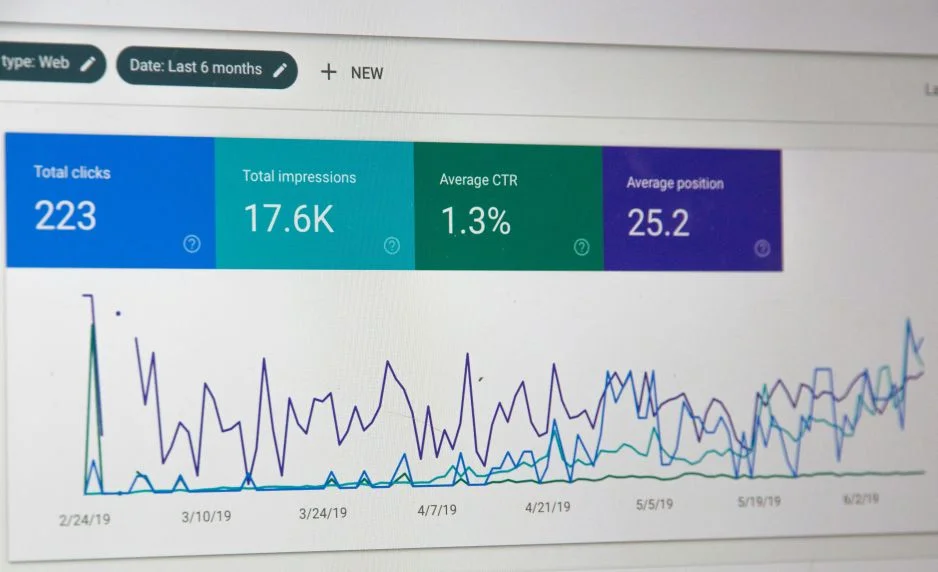
Once you are inside your account, navigate to the Performance section and look at the Search Results report. Here you will see your total clicks, impressions, click-through rate and average position for every query your site appears for. By default, the view shows clicks, but to find your ranking opportunities, you want to focus on impressions alongside average position.
Want more insights like this?
Join thousands of marketers getting weekly tips and strategies.
Filter your results to show queries where your average position is between four and twenty. These are terms where Google already considers you relevant, but where you have not yet secured a position strong enough to capture meaningful traffic. Sort by impressions to see which of these terms are being searched most frequently. Those high-impression, mid-position queries are your targets.
Expanding Your View With Third-Party Tools
Google Search Console is an excellent starting point, but combining it with a dedicated SEO platform gives you a fuller picture. Tools such as Ahrefs and Semrush allow you to audit your existing rankings in considerable depth, identifying not just where you rank but how difficult it will be to move up, what your competitors are doing differently on their pages, and whether there are related terms clustered around your target keyword that you are not yet addressing.
The Site Explorer function in Ahrefs, for instance, lets you filter your organic keywords by position range, search volume and keyword difficulty simultaneously. This makes it considerably easier to prioritise which keywords are worth targeting first, rather than trying to work through an enormous list without any structure or logic.
Diagnosing Why A Page Is Stuck
Once you have identified a keyword and the page that ranks for it, the next step is understanding why that page has not moved higher. There are several common reasons a page plateaus at a mid-ranking position, and each one requires a different response.
The first thing to look at is the content itself. Go to Google and search for your target keyword, then review the pages that are outranking yours. Are they longer and more detailed? Do they answer questions your page does not address? Are they structured more clearly with better use of headings and subheadings? If the answer to any of those is yes, your content needs strengthening before anything else.
Page experience is another factor worth examining. Google's PageSpeed Insights tool will give you a clear read on how your page performs in terms of loading speed, mobile usability and Core Web Vitals. A page that loads slowly or provides a poor experience on mobile is going to struggle to compete, regardless of how good the written content is.
Strengthening The Page To Earn A Higher Position
With your diagnosis complete, you can begin making targeted improvements. If your content is thin compared to what ranks above you, expand it. Add sections that address related questions, include practical examples, and make sure you are covering the topic with genuine depth. This is not about word count for its own sake; it is about making your page the most useful and comprehensive resource available for that search term.
Internal linking is another lever that is frequently underused. If you have other relevant pages on your site that could logically link to the page you are trying to improve, add those links. Each internal link passes authority and signals to Google the relevance and importance of the destination page.
External backlinks still carry weight in how Google evaluates page authority. If your target page has very few links pointing to it from other reputable websites, that is worth addressing. Even a handful of high-quality links from relevant, trusted sources can make a meaningful difference to where a page settles in the rankings.
Monitoring Progress And Iterating
SEO improvements rarely produce instant results. Once you have made changes to a page, give Google time to recrawl and reassess it. Return to Search Console after four to six weeks and review the data again. Look at whether your average position for the target keyword has improved, whether your click-through rate has changed, and whether impressions have shifted in any direction.
If a page moves in the right direction, continue building on what is working. If it does not respond as expected, revisit your competitive analysis and look more carefully at what the top-ranking pages are doing that yours is not. SEO at this level is an iterative process, and the willingness to keep refining is what separates those who see results from those who give up too early.
The keywords you already rank for are a foundation that many website owners fail to fully capitalise on. By identifying them systematically, diagnosing what is holding each page back, and making targeted, intelligent improvements, you give yourself the best possible chance of turning mid-page rankings into genuine traffic drivers. It is one of the most practical and cost-effective SEO strategies available, and for most websites, it is exactly where the effort should begin.
Ian
Ian has worked in Digital Marketing for decades, and is a Google Partner for Google Ads and an expert in onsite and technical SEO. He has worked with hundreds of clients, helping them achieve success online, through SEO, PPC and Digital Marketing, working with local businesses through to national retailers.
View all posts →Related Articles

Why Rankings Are A Poor Way To Measure Your SEO Campaign Success Rate
Too many people still rely on the tracking of keywords to rate their campaign, which as we go onto discuss, is not the best way of judging the success and effectiveness of your campaign.

The Link Building Mistakes That Will Catch You In The End
Links are still a fundamental part of SEO and improving rankings in the search engines and even though more emphasis than ever has been placed on how good and optimised your website is, link building is simply something that cannot be overlooked if you want long term success.
Why CRO Is Now As Important For SEO Than Ever Before
For years, the digital marketing world treated conversion rate optimisation (CRO) and search engine optimisation (SEO) as separate disciplines. SEO focused on driving traffic, CRO focused on convertin...