
How To Track Your Keyword Rankings Without Expensive Tools
Tracking your keyword rankings is one of the most fundamental practices in search engine optimisation, yet many website owners and small business operators assume it requires a significant financial i...

Tracking your keyword rankings is one of the most fundamental practices in search engine optimisation, yet many website owners and small business operators assume it requires a significant financial investment in premium tools. The reality is that you can build a solid, reliable picture of where your site stands in the search results without spending a penny on subscription software. Knowing how to track your keyword rankings without expensive tools is not just a cost-saving exercise, it is also about understanding the data that is genuinely available to you and making smart use of it.
Why Keyword Ranking Matters in the First Place
Before diving into the methods, it is worth being clear about why you should be tracking rankings at all. If you are investing time and resource into creating content, optimising pages, or building links, you need to know whether any of that effort is moving the needle. Keyword rankings tell you where your pages appear in Google's search results for specific search terms, and when tracked consistently over time, they reveal trends that help you make better decisions about your SEO strategy. Without this visibility, you are essentially working in the dark and hoping for the best.
Google Search Console Is Your Starting Point
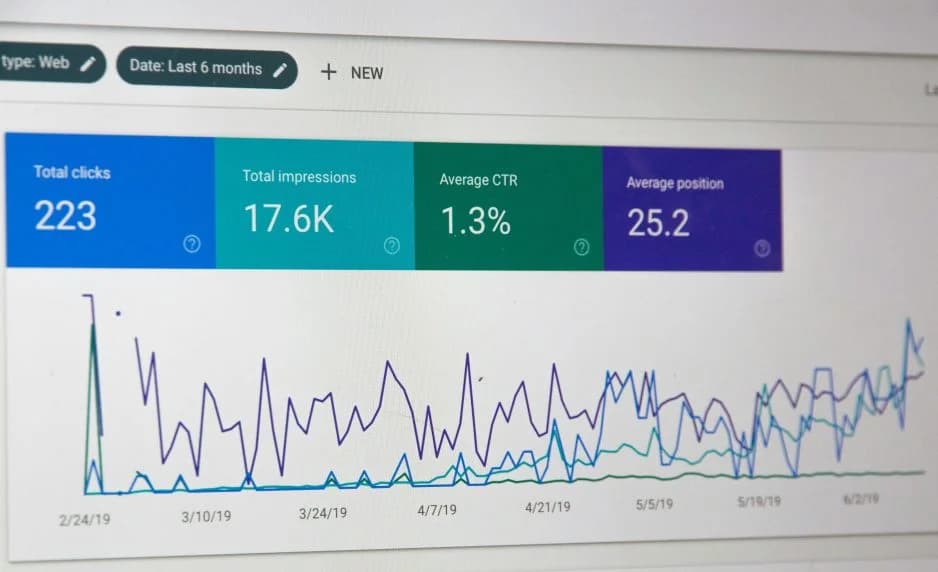
Google Search Console is, without question, the most powerful free tool available for understanding your keyword performance. It is provided directly by Google, which means the data comes straight from the source rather than being estimated or modelled by a third party. Once your site is verified, the Performance report gives you access to the queries people are using to find your pages, along with impressions, clicks, and average position data.
The average position metric is your ranking indicator. If a query is showing an average position of 4.2, that tells you your page is appearing just outside the top three results on average for that search term. You can filter by date range, compare periods, and drill down into individual pages to see which queries are driving traffic to specific content. This is genuinely useful data, and many site owners overlook just how much intelligence is sitting inside their Search Console account.
The key to getting the most from this is to use it consistently. Set aside time each week or fortnight to review your top queries, identify which keywords are climbing or slipping, and cross-reference those movements with any changes you have made to your site. Over time, you build a clear picture of your keyword trajectory without paying for anything.
Using Google Sheets to Build Your Own Rank Tracker
One of the most practical and underused approaches is to build your own simple rank tracker using Google Sheets. The process does not need to be complicated. Create a spreadsheet with your target keywords listed in one column, and then record your average position from Search Console at regular intervals in subsequent columns. Label each column with a date, and you have a manual but highly effective tracking system that costs nothing.
Want more insights like this?
Join thousands of marketers getting weekly tips and strategies.
The benefit of doing this manually, even if it feels old-fashioned, is that it forces you to actually engage with the data rather than simply glancing at a dashboard. When you are entering the numbers yourself, you start to notice patterns, spot anomalies, and develop a genuine feel for how your site is performing. That kind of hands-on familiarity with your data is something no automated tool can replicate.
Incognito Searches and Their Limitations
Many people still manually check their rankings by typing their keywords into Google in an incognito or private browsing window. The logic is sound in that it removes your personal browsing history from the equation, which can otherwise skew results. However, it is important to understand what this method can and cannot tell you. Google personalises results based on a range of signals including location, device, and search history, so even in incognito mode, what you see may not reflect what someone else in a different town or on a different device would see.
That said, this method still has value as a sanity check. If you want to verify whether a particular page is appearing on page one for a specific term, a quick incognito search will give you a reasonable indication. It is not a substitute for the aggregated data in Search Console, but it is a useful complementary check, particularly when you are investigating a specific page or keyword rather than trying to track performance at scale.
Bing Webmaster Tools Deserves More Attention
Google dominates search in most markets, but Bing Webmaster Tools is a free platform that is genuinely worth setting up alongside Search Console. It provides its own keyword performance data, keyword research tools, and site diagnostics, all at no cost. For sites that receive meaningful traffic from Bing, which is more common in certain demographics and regions than many marketers assume, this data is directly relevant to your ranking efforts.
Even if Bing represents a small share of your traffic, the keyword insights available within the platform can complement what you are seeing in Search Console and give you a broader view of how your content is performing across the search landscape.
Free Tier Tools Worth Knowing About
There are several tools that offer limited but genuinely useful free access to ranking data. Ubersuggest by Neil Patel provides a small number of daily searches and allows you to check keyword positions for your domain. Semrush has a free account tier that lets you run a limited number of keyword queries per day, which is enough for small sites or focused tracking on priority terms. Ahrefs Webmaster Tools is another free option that, once connected to your verified site, provides keyword ranking data and backlink information without a subscription.
None of these free tiers will give you the full depth of a paid account, but used intelligently alongside Search Console, they fill gaps and provide additional perspective on your keyword positions. The discipline is in knowing which keywords you want to focus on and checking those consistently rather than trying to track everything all at once.
Setting Up a Keyword Tracking Routine
The biggest challenge with tracking keyword rankings using free methods is not the lack of data, it is the lack of a consistent routine. Paid tools automate the process and send you reports without you having to think about it. Free methods require more discipline, but that discipline pays dividends in how well you actually understand your site's performance.
A sensible routine might look something like this. Once a week, open Search Console and check your top twenty to thirty queries by impressions. Note any significant movements in average position. Once a fortnight, update your Google Sheets tracker with the latest figures and look at the trend over time. Once a month, run a quick check using whichever free tool tier you have access to, to cross-reference the data and look for any keywords you might be missing from your tracking list.
This kind of structured approach means you are never more than a week or two away from a clear picture of your ranking performance, and you are building a historical record that will become increasingly valuable as your site grows.
Understanding the Data You Collect
Collecting ranking data is only half of the process. The other half is interpreting it correctly. A drop in average position for a keyword does not automatically mean something has gone wrong. It could reflect new competition entering the results, a Google algorithm update, or seasonal fluctuations in search behaviour. Similarly, an improvement in position does not always translate directly into more traffic, particularly if the keyword in question has low search volume.
The goal is to look for patterns rather than reacting to individual data points. If you see a consistent downward trend across a cluster of related keywords over several weeks, that is a signal worth investigating. If one keyword drops for a fortnight and then recovers, it is likely noise rather than a meaningful trend.
You Do Not Need to Spend to Stay Informed
Knowing how to track your keyword rankings without expensive tools comes down to combining the free platforms that are already available to you, building simple but consistent habits around data collection, and developing the analytical mindset to interpret what the numbers are telling you. Google Search Console alone provides more genuinely useful ranking intelligence than many site owners realise, and when paired with a basic tracking spreadsheet and the occasional check through a free tool tier, you have a comprehensive system that requires nothing more than your time and attention. Start with what you have, use it consistently, and the picture of your site's search performance will become considerably clearer.
Ian
Ian has worked in Digital Marketing for decades, and is a Google Partner for Google Ads and an expert in onsite and technical SEO. He has worked with hundreds of clients, helping them achieve success online, through SEO, PPC and Digital Marketing, working with local businesses through to national retailers.
View all posts →Related Articles

Why Rankings Are A Poor Way To Measure Your SEO Campaign Success Rate
Too many people still rely on the tracking of keywords to rate their campaign, which as we go onto discuss, is not the best way of judging the success and effectiveness of your campaign.

The Link Building Mistakes That Will Catch You In The End
Links are still a fundamental part of SEO and improving rankings in the search engines and even though more emphasis than ever has been placed on how good and optimised your website is, link building is simply something that cannot be overlooked if you want long term success.
Why CRO Is Now As Important For SEO Than Ever Before
For years, the digital marketing world treated conversion rate optimisation (CRO) and search engine optimisation (SEO) as separate disciplines. SEO focused on driving traffic, CRO focused on convertin...