
Top 10 Local SEO Ranking Factors That Actually Matter
Local SEO is one of those areas of digital marketing where the gap between what people think matters and what actually moves the needle can be enormous. Businesses pour time and money into tactics tha...
Local SEO is one of those areas of digital marketing where the gap between what people think matters and what actually moves the needle can be enormous. Businesses pour time and money into tactics that have little bearing on their local search visibility, whilst overlooking the fundamentals that Google genuinely rewards. If you want to appear in front of customers who are searching for exactly what you offer in your area, understanding the top 10 local SEO ranking factors that actually matter is not optional; it is essential. This guide breaks them down clearly, so you can focus your efforts where they will have the most impact.
Your Google Business Profile
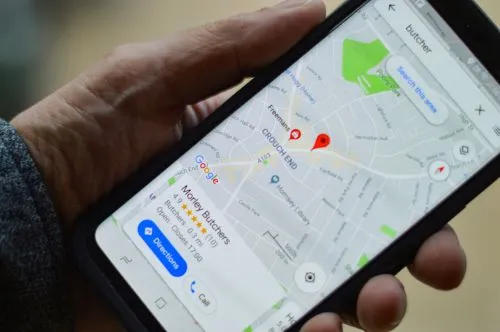
If there is one single asset that underpins your entire local search presence, it is your Google Business Profile. Previously known as Google My Business, this free listing is the cornerstone of how Google decides whether to show your business in local map results and the local pack. A fully completed profile, with accurate business categories, opening hours, a detailed business description, and high-quality images, sends a clear signal to Google that your business is legitimate and relevant.
Many businesses claim their profile and then abandon it. That approach leaves a significant amount of local visibility on the table. Google rewards profiles that are actively managed, updated, and engaged with. Treat your Google Business Profile not as a one-time task but as an ongoing marketing channel in its own right.
NAP Consistency Across the Web
NAP stands for Name, Address, and Phone Number, and the consistency of these details across every online platform your business appears on is a critical local SEO ranking factor. When Google crawls the web and finds your business listed on directories, social profiles, and citation sites, it cross-references that information. Inconsistencies, even minor ones such as abbreviating Street to St in one place and spelling it out in another, can introduce doubt about the accuracy of your business data.
Auditing your citations and ensuring uniformity across platforms like Yell, Yelp, and industry-specific directories is a discipline that pays dividends over time. It is not the most glamorous work in digital marketing, but it is the kind of foundational effort that serious local search performance is built upon.
Proximity to the Searcher
Proximity is one factor you cannot directly optimise, but you absolutely need to understand it. When someone searches for a service near them, Google will factor in how close your business is to the location of that search. This is why a business on one side of a city might rank well for searches originating in that area but struggle to appear for searches from the other side of town.
Whilst you cannot move your premises to improve proximity, you can build location-specific content and landing pages that signal relevance to particular neighbourhoods or areas. If your business serves multiple locations, creating dedicated, well-optimised pages for each of those areas can help you compete across a wider geographic footprint.
Review Quantity, Quality, and Recency
Want more insights like this?
Join thousands of marketers getting weekly tips and strategies.
Customer reviews are one of the most powerful local SEO ranking factors, and they influence both where you rank and whether someone chooses to click on your listing. Google pays attention to the number of reviews your business has accumulated, the average star rating, and how recently those reviews were posted. A business with a strong and consistent flow of genuine reviews is far more likely to be favoured in local results than one with a handful of old reviews and nothing recent to speak of.
Encouraging satisfied customers to leave a review on your Google Business Profile should be a routine part of your customer experience process. Equally important is responding to reviews, both positive and negative, which signals to Google and to prospective customers that your business is engaged and values feedback.
On-Page SEO With Local Signals
Your website's on-page SEO needs to speak to your location as clearly as it speaks to your services. This means including your city, town, or region naturally within your page titles, meta descriptions, heading tags, and body content. A plumber in Bristol whose website never once mentions Bristol is fighting local search with one hand tied behind their back.
Beyond simply mentioning your location, embedding a Google Map on your contact page, including your full address in the footer, and implementing LocalBusiness schema markup all contribute to strengthening the local relevance signals your site sends to search engines.
Local Link Building
Backlinks remain one of the most important ranking factors in SEO broadly, and in local SEO, the quality and local relevance of those links matters enormously. A link from a well-regarded local news publication, a regional business association, or a complementary local business carries considerable weight. It tells Google that your business is embedded within and recognised by the community it serves.
Pursuing local link opportunities requires genuine community engagement. Sponsoring local events, contributing to regional publications, partnering with neighbouring businesses, and engaging with local chambers of commerce are all legitimate and effective routes to building the kind of locally relevant backlink profile that supports strong local search rankings.
Behavioural Signals
Google pays close attention to how users interact with search results, and these behavioural signals feed into local ranking decisions. Click-through rates from local results, how long someone stays on your website after visiting, and whether they use the click-to-call or get directions features on your Google Business Profile all contribute to Google's understanding of how relevant and trustworthy your business is for a given search.
Improving these signals comes down to making your listing and your website as compelling and useful as possible. A strong, clear business description, genuine and recent photography, and a website that loads quickly and answers the questions your customers are actually asking will all contribute positively to these engagement metrics.
Mobile Optimisation
The overwhelming majority of local searches happen on mobile devices. Someone looking for a restaurant, a solicitor, or a nearby garage is almost certainly searching on their phone, often whilst they are already out and about. If your website is not fully optimised for mobile, you are creating friction at the exact moment someone is ready to make a decision about your business.
Mobile optimisation goes beyond simply having a responsive design, though that is the non-negotiable starting point. Page speed on mobile, easy-to-tap phone numbers and call-to-action buttons, and content that is scannable on a small screen all play into whether a mobile visitor converts into an enquiry or a customer. Google's PageSpeed Insights tool is a practical place to begin assessing where your mobile experience could be improved.
Local Content Strategy
Publishing content that is genuinely relevant to your local audience is a strategy that many businesses overlook, yet it is one that builds long-term authority in your area. Writing about local events, addressing questions that your specific community has, creating guides relevant to your region, or producing content that highlights your involvement in the local area all serve to reinforce your geographic relevance in Google's eyes.
This is not about producing low-quality, keyword-stuffed location pages. Google has become increasingly adept at identifying thin, unhelpful content and penalising sites that rely on it. The standard to aim for is content that a local reader would genuinely find useful, informative, or interesting. That is the content that earns engagement, shares, and the kind of organic links that strengthen your local authority over time.
Citation Building on Quality Directories
Beyond NAP consistency, the process of actively building citations on reputable directories and platforms remains a meaningful local SEO ranking factor. Being listed on established directories signals to Google that your business has a verifiable presence across the web. The key distinction is quality over quantity; a listing on a trusted, well-indexed directory is worth far more than a dozen entries on obscure or spammy sites.
Focus on directories that are relevant to your industry and your region. For UK businesses, platforms such as Thomson Local, Checkatrade for tradespeople, and sector-specific directories that your potential customers actually use are worth prioritising. Each accurate and complete citation you build adds another thread to the web of trust that underpins your local search visibility.
Putting It All Together
Local SEO is not a single lever you pull; it is the cumulative effect of getting a number of interconnected elements right and maintaining them consistently over time. The businesses that dominate local search results are not always the biggest or the longest established; they are the ones that take these ranking factors seriously and apply them with discipline and patience.
Start with your Google Business Profile and make sure it is complete, accurate, and actively managed. Audit your NAP consistency, build a review acquisition process into your customer journey, and invest in locally relevant content and links. Each of these steps reinforces the others, and together they build the kind of robust local presence that puts your business in front of the right people at the right moment. That, ultimately, is what local SEO is designed to do.
Ian
Ian has worked in Digital Marketing for decades, and is a Google Partner for Google Ads and an expert in onsite and technical SEO. He has worked with hundreds of clients, helping them achieve success online, through SEO, PPC and Digital Marketing, working with local businesses through to national retailers.
View all posts →Related Articles

Why Rankings Are A Poor Way To Measure Your SEO Campaign Success Rate
Too many people still rely on the tracking of keywords to rate their campaign, which as we go onto discuss, is not the best way of judging the success and effectiveness of your campaign.

The Link Building Mistakes That Will Catch You In The End
Links are still a fundamental part of SEO and improving rankings in the search engines and even though more emphasis than ever has been placed on how good and optimised your website is, link building is simply something that cannot be overlooked if you want long term success.
Why CRO Is Now As Important For SEO Than Ever Before
For years, the digital marketing world treated conversion rate optimisation (CRO) and search engine optimisation (SEO) as separate disciplines. SEO focused on driving traffic, CRO focused on convertin...