Why Am I Getting Impressions But No Clicks In Google Search Console
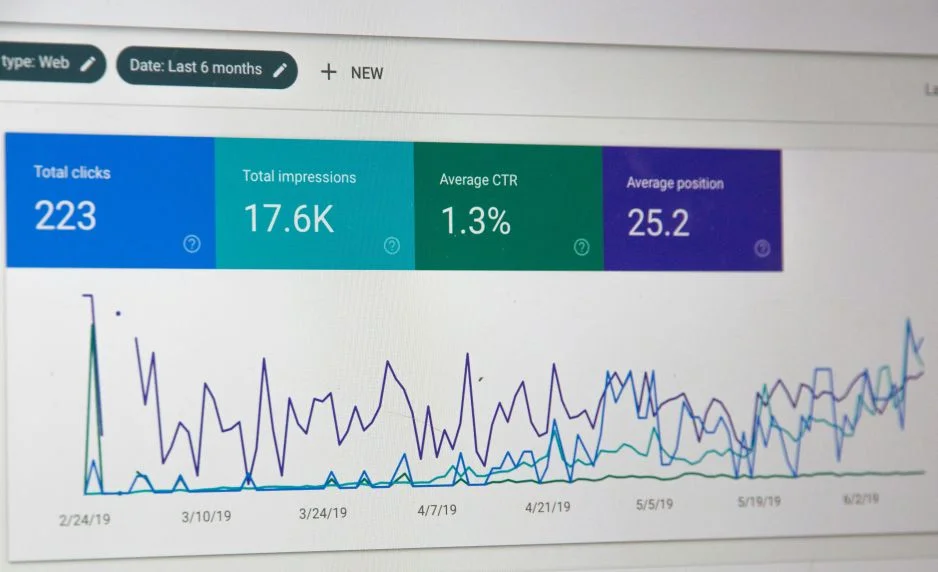
If you have spent any time looking at your Google Search Console data, you have probably experienced that slightly baffling moment where you can see your impressions climbing, yet your clicks remain s...
If you have spent any time looking at your Google Search Console data, you have probably experienced that slightly baffling moment where you can see your impressions climbing, yet your clicks remain stubbornly low. It is one of the most common questions that website owners and digital marketers ask, and it is a completely understandable source of frustration. You are appearing in front of people, Google is showing your pages, and yet nobody is actually clicking through to your site. So what is going wrong, and more importantly, what can you do about it?
The answer is rarely one single thing. There are usually several factors at play, and understanding each of them gives you a much clearer picture of what your data is actually telling you. Google Search Console is giving you a gift here, even if it does not feel like it. Impressions without clicks are not just a problem to solve, they are a signal, and once you know how to read that signal, you can take meaningful action.
Understanding What Impressions Actually Mean
Before diving into the reasons behind low click-through rates, it is worth being clear about what an impression actually represents. In Google Search Console, an impression is recorded every time your URL appears in a search result, regardless of where it appears on the page or whether the user scrolls down to see it. This means that a page ranking in position 45 can rack up impressions without ever being genuinely visible to most searchers.
This distinction matters enormously. High impressions with low clicks often simply means your pages are ranking, but they are ranking too far down the page to attract meaningful attention. Position one through three typically captures the vast majority of clicks for any given query, and anything beyond page one is, for most searches, largely invisible in practical terms.
Your Titles and Meta Descriptions Are Not Compelling Enough
Even when you do rank on page one, there is no guarantee that someone will choose your result over the others around it. The title tag and meta description are your advertisement in the search results. They are the first thing a potential visitor reads, and if they do not speak directly to what that person is looking for, they will simply click on something else instead.
Think about the search results from the user's perspective. They are scanning a list of options and making a split-second decision about which one looks most relevant and trustworthy. A title that is vague, generic, or simply stuffed with keywords without any clear benefit is unlikely to stand out. The same applies to a meta description that reads like a technical summary rather than a clear, inviting reason to visit the page.
Reviewing your top impression-generating pages in Google Search Console and then checking how your titles and descriptions actually read in the search results is a worthwhile exercise. Consider rewriting them to focus on the benefit to the reader, address the specific intent behind the query, and include a clear reason to click.
Want more insights like this?
Join thousands of marketers getting weekly tips and strategies.
You Are Ranking for Informational Queries but Offering Commercial Content
Search intent is one of the most important concepts in modern SEO, and mismatches between what your page offers and what the searcher actually wants are a very common cause of low click-through rates. If your page is optimised around a query that is primarily informational, meaning people are looking to learn something rather than buy something, but your page is clearly a product or service page, users will often skip it in favour of a result that looks more aligned with what they actually need.
The reverse is also true. A blog post or guide appearing for a query where users are ready to make a purchase decision may not attract clicks either, because people scanning those results are looking for a product page, a pricing page, or a comparison tool rather than a long-form article. Auditing the intent behind your highest impression queries and making sure your page type and content match that intent closely is one of the more impactful adjustments you can make.
Your Average Position Is Lower Than It Looks
Google Search Console reports an average position for each query, and that average can sometimes be misleading. If your page fluctuates between position two and position twenty depending on the device, location, or time of day, the average might show something like position eleven, which looks reasonable enough. But in reality, many of those impressions are coming from positions where clicks are extremely unlikely.
Filtering your data by device, date range, and country within Google Search Console can reveal a much more nuanced picture. You might find that on mobile devices your rankings are significantly lower than on desktop, or that certain geographic areas are pulling your averages down. Breaking your data down into these segments allows you to identify where the real opportunities are and where your efforts are best focused.
Featured Snippets and SERP Features Are Absorbing the Clicks
One phenomenon that many website owners overlook is the impact of what are known as zero-click searches. Google increasingly provides answers directly within the search results through featured snippets, knowledge panels, People Also Ask boxes, and other rich features. When someone searches for a straightforward factual question and Google surfaces the answer directly on the results page, a significant number of users will read that answer and move on without clicking anything at all.
If your pages are generating impressions for queries where these SERP features are prominent, your click-through rate will naturally be lower, and that is not necessarily a sign that something is broken. It is simply the nature of how those particular searches behave. That said, if you are the source of a featured snippet, there is still value in being the authority that Google chooses to highlight, even if the direct click volume is reduced.
Your Brand Awareness May Be Working Against You
For websites that are relatively new or operating in competitive spaces where established brands dominate, users may subconsciously gravitate towards the names they recognise, even when your result appears alongside them. Trust signals matter in the search results just as much as they do on a landing page, and a brand that someone has heard of will often win the click even if your page is technically more relevant.
Building brand recognition takes time, but it is something that content marketing, social media presence, and consistent messaging across channels can all contribute to. The more familiar your name becomes within your target audience, the more likely they are to click your result when they see it, even in a crowded set of search results.
The Page Experience Signals Are Sending a Warning
Google has placed increasing emphasis on page experience as a ranking and engagement factor, and whilst this might not directly explain low click-through rates from the search results page, it does connect to a broader picture of how your site performs. If users have previously visited your site and had a poor experience, whether due to slow loading times, intrusive pop-ups, or difficult navigation, they may be less inclined to click your result in future searches.
Tools like Google PageSpeed Insights can help you identify technical performance issues that might be affecting user experience. Addressing these not only improves the experience for those who do visit, but over time can contribute to stronger brand perception in the search results.
What To Do Next
Getting impressions but no clicks in Google Search Console is a situation that almost every website owner encounters at some point, and the good news is that it is rarely permanent. The data you are looking at is telling you something specific about the gap between your visibility and your appeal, and closing that gap is a structured process rather than a guessing game.
Start by identifying which pages are generating the most impressions with the lowest click-through rates. Then work through the factors covered here systematically, examining your ranking positions, reviewing your titles and descriptions, checking the intent alignment of your content, and looking at the SERP landscape for your target queries. Each of these steps brings you closer to understanding not just why the clicks are not coming, but exactly what you need to do to change that.
Google Search Console gives you the visibility to ask the right questions. What you do with those answers is where the real work begins.
Ian
Ian has worked in Digital Marketing for decades, and is a Google Partner for Google Ads and an expert in onsite and technical SEO. He has worked with hundreds of clients, helping them achieve success online, through SEO, PPC and Digital Marketing, working with local businesses through to national retailers.
View all posts →Related Articles

Why Rankings Are A Poor Way To Measure Your SEO Campaign Success Rate
Too many people still rely on the tracking of keywords to rate their campaign, which as we go onto discuss, is not the best way of judging the success and effectiveness of your campaign.
The Link Building Mistakes That Will Catch You In The End
Links are still a fundamental part of SEO and improving rankings in the search engines and even though more emphasis than ever has been placed on how good and optimised your website is, link building is simply something that cannot be overlooked if you want long term success.
Why CRO Is Now As Important For SEO Than Ever Before
For years, the digital marketing world treated conversion rate optimisation (CRO) and search engine optimisation (SEO) as separate disciplines. SEO focused on driving traffic, CRO focused on convertin...