
How To Do Keyword Research Without Spending A Fortune
Keyword research sits at the very heart of any successful SEO strategy, yet far too many businesses either skip it entirely or assume they need to spend hundreds of pounds a month to do so.

Keyword research sits at the very heart of any successful SEO strategy, yet far too many businesses either skip it entirely or assume they need to spend hundreds of pounds a month on premium tools to do it properly. Neither approach serves you well. The truth is, with a little know-how and access to the right free and low-cost resources, you can build a remarkably solid picture of how your audience searches, what they are looking for, and how you can position your content to meet them at exactly the right moment. This guide is designed to walk you through how to do keyword research without spending a fortune, and to show you that meaningful results are well within reach regardless of your budget.
Start With What You Already Know
Before you open a single tool or platform, the most valuable keyword research asset you have is your own knowledge of your business, your customers, and the problems you solve. Think about the questions your customers ask most frequently. Think about how they describe your products or services when they speak to you directly. More often than not, the language your customers use in conversation is far closer to the language they type into a search engine than any automated tool will suggest.
Write down a list of core topics that are central to what you do. If you run a plumbing business in Bristol, your core topics might include boiler repair, emergency plumber, and bathroom installation. If you run an e-commerce store selling handmade candles, your topics might revolve around scented candles, gift ideas, and home fragrance. These broad themes become the foundation for everything else you build your keyword research around, and they cost you absolutely nothing to identify.
Spend thirty minutes writing down every question, phrase, or problem your customers raise with you and treat that list as your starting point for all keyword ideas.
Make Google Work For You
Google itself is one of the most powerful and completely free keyword research tools available, and most people overlook it entirely. When you begin typing a search query into Google, the autocomplete suggestions that appear are not random. They are generated from real search data, reflecting what people are genuinely searching for at scale. Pay attention to these suggestions because they reveal natural, conversational phrases that your audience is already using.
Once you run a search, scroll to the bottom of the results page and look at the related searches section. This is another goldmine of keyword ideas directly sourced from Google's own data. Similarly, the People Also Ask boxes that appear within search results show you the questions people are asking around your topic, which is particularly useful for identifying long-tail keywords and informational search intent.
None of this costs a penny, yet it gives you a genuinely useful window into search behaviour that you can act on immediately. The key is to approach it systematically rather than in an ad hoc way, noting down every suggestion that feels relevant and grouping them into themes for later use.
Run searches for your ten most important topics and record every autocomplete suggestion and related search you find. You will be surprised how quickly the list grows.
Use Google Search Console Properly
Want more insights like this?
Join thousands of marketers getting weekly tips and strategies.
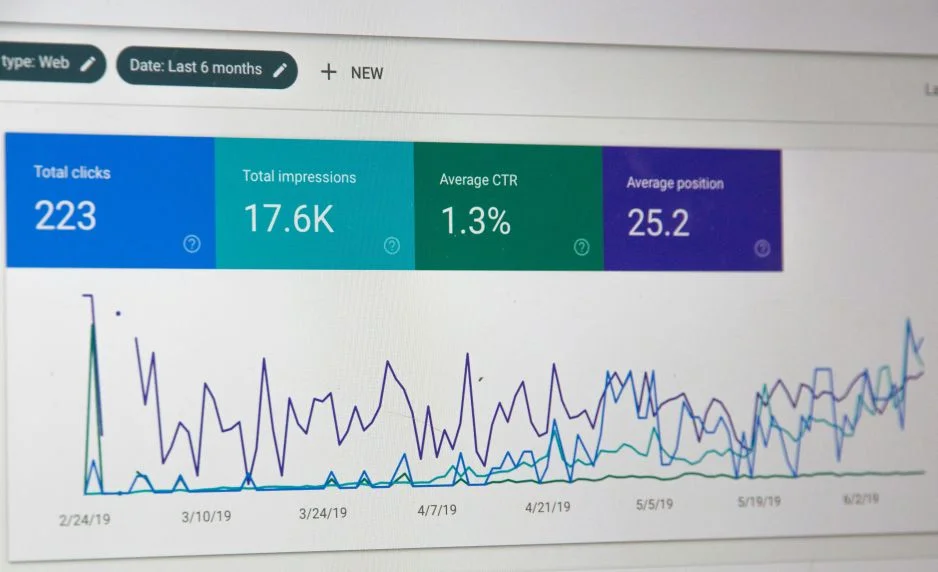
If your website is already live and receiving any traffic at all, Google Search Console is an essential and entirely free resource for keyword research. It shows you exactly which search queries are driving impressions and clicks to your site, giving you real-world data about how people are already finding you. This is incredibly powerful because it removes the guesswork entirely and replaces it with evidence.
Within Search Console, look at the queries that are generating a high number of impressions but a relatively low click-through rate. These are pages that are appearing in search results but not compelling people to click, which usually means the content or the title and meta description could be improved. At the same time, look for queries where you are ranking on page two or three for terms that are genuinely relevant to your business. These are your low-hanging fruit, terms where a relatively small improvement in content quality or on-page optimisation could push you onto page one and start driving meaningful traffic.
Filter your Search Console queries by position, focusing on terms where you rank between positions eight and twenty, and prioritise those pages for content improvements before chasing entirely new keywords.
Leverage Free Keyword Tools Wisely
There are a number of free and freemium keyword research tools that can add genuine depth to your research without requiring a significant financial commitment. Google Keyword Planner is perhaps the most well-known, and whilst it was designed with Google Ads in mind, it remains a highly useful resource for understanding search volume and identifying related keyword ideas. The volume data tends to be presented in broad ranges rather than precise figures on the free tier, but it is more than sufficient for building an informed strategy.
Ubersuggest offers a limited number of free searches per day and provides keyword suggestions, basic search volume data, and an indication of keyword difficulty. Answer The Public is another valuable free resource that visualises the questions, comparisons, and prepositions people use around a given keyword, making it particularly useful for content planning and identifying informational search intent. Neither of these tools requires a subscription to get meaningful value from them, as long as you use your daily free searches wisely and record everything you find.
The important thing to remember is that these tools should complement each other rather than replace one another. Each one has its own strengths, and by combining insights from several sources, you end up with a much more rounded view of the keyword landscape than any single tool would give you on its own.
Use a simple spreadsheet to log keywords from each tool, noting the search volume range, difficulty indicator, and the source, so you can compare and prioritise across all your research in one place.
Analyse What Your Competitors Are Doing
Your competitors have already done a great deal of keyword research, whether they know it or not, and you can learn a significant amount from looking at what they are targeting. Start by identifying the top three or four competitors in your space and look at the pages that rank well for them in search results. Read the content on those pages carefully and pay attention to the language being used, the topics being covered, and the questions being answered.
Look at their page titles, meta descriptions, and heading structures. These elements often reveal the primary and secondary keywords a page is targeting and give you a clear indication of the search terms driving traffic to their site. You do not need an expensive tool to do this kind of analysis. A careful read-through combined with a free browser extension like Keywords Everywhere, which offers a paid tier but also provides some useful free functionality, can tell you a great deal about how competitors are positioning their content.
The goal here is not to copy what your competitors are doing but to identify gaps, opportunities, and areas where you can create something more useful, more detailed, or better targeted than what is already out there.
Choose one competitor and spend an hour reviewing their top five ranking pages, noting every topic, phrase, and question they address, then ask yourself honestly whether your own content covers those areas as effectively.
Focus On Search Intent, Not Just Search Volume
One of the most common mistakes people make when learning how to do keyword research is fixating on search volume at the expense of understanding search intent. A keyword with a modest monthly search volume but a clear commercial or transactional intent is often far more valuable to a business than a high-volume informational term that attracts visitors with no intention of buying anything.
Search intent broadly falls into four categories: informational, navigational, commercial, and transactional. When you are assessing keywords, think carefully about which category each one falls into and whether it aligns with the goals of the specific page you are creating or optimising. A blog post is well suited to informational queries, whilst a product or service page should target terms with commercial or transactional intent. Matching your content type to the right intent is one of the most important and often most overlooked elements of solid search engine optimisation.
Before finalising any keyword for a page, type it into Google yourself and look at the type of content that dominates the first page of results. That will tell you clearly what Google believes the intent behind that term to be.
Build A Long-Term Keyword Strategy
Keyword research is not a one-time task. Search behaviour evolves, new topics emerge, and your business itself will grow and change over time. Building a sustainable approach to keyword research means treating it as an ongoing process rather than a box to tick once and forget about. Set aside time every quarter to revisit your keyword lists, check on the performance of pages you have optimised, and look for new opportunities that align with where your business is heading.
The businesses that do this consistently and thoughtfully, even without expensive tools or large budgets, tend to outperform those that splash out on premium platforms but use them without a clear strategy. The fundamentals of good keyword research are not hidden behind a paywall. They require curiosity, consistency, and a genuine understanding of the audience you are trying to reach.
Putting It All Together
Effective keyword research for SEO does not have to be expensive. By starting with your own knowledge, tapping into the free data that Google provides, making full use of Search Console, combining insights from free tools, learning from your competitors, and always keeping search intent front of mind, you can build a keyword strategy that is both robust and sustainable. The tools you choose to use matter far less than the quality of thinking you bring to the process. Invest your time wisely, stay consistent, and the results will follow.
Ian
Ian has worked in Digital Marketing for decades, and is a Google Partner for Google Ads and an expert in onsite and technical SEO. He has worked with hundreds of clients, helping them achieve success online, through SEO, PPC and Digital Marketing, working with local businesses through to national retailers.
View all posts →Related Articles

Why Rankings Are A Poor Way To Measure Your SEO Campaign Success Rate
Too many people still rely on the tracking of keywords to rate their campaign, which as we go onto discuss, is not the best way of judging the success and effectiveness of your campaign.

The Link Building Mistakes That Will Catch You In The End
Links are still a fundamental part of SEO and improving rankings in the search engines and even though more emphasis than ever has been placed on how good and optimised your website is, link building is simply something that cannot be overlooked if you want long term success.
Why CRO Is Now As Important For SEO Than Ever Before
For years, the digital marketing world treated conversion rate optimisation (CRO) and search engine optimisation (SEO) as separate disciplines. SEO focused on driving traffic, CRO focused on convertin...