
What Are Google Algorithm Updates And How To Survive Them
If you have been working in digital marketing or managing a website for any length of time, you will know that Google algorithm updates can feel like unpredictable weather.

If you have been working in digital marketing or managing a website for any length of time, you will know that Google algorithm updates can feel like unpredictable weather. One day your rankings are strong, your organic traffic is climbing, and everything seems to be working in your favour. Then, almost overnight, something shifts and pages that were performing well suddenly disappear from page one. Understanding what Google algorithm updates are and how to survive them is not just useful knowledge for SEO professionals, it is essential for anyone who relies on organic search traffic to grow their business online.
Google updates its search algorithm thousands of times each year. The vast majority of these are minor tweaks that most website owners will never notice. However, the major updates, the ones that get names and generate significant industry discussion, can have a profound impact on rankings across entire sectors. Learning how to navigate these changes is one of the most important skills you can develop as a website owner or digital marketer.
What Are Google Algorithm Updates?
At their core, Google algorithm updates are changes made to the formula that Google uses to rank websites in its search results. Google's primary goal has always been to provide searchers with the most relevant, trustworthy, and high-quality results for any given query. The algorithm is the engine that determines which pages achieve that standard and in what order they appear.
Some updates are broad and wide-reaching, affecting large portions of the search index. Others are more targeted, focusing on specific issues such as link quality, content originality, or website experience. Google regularly publishes information about its major updates on the Google Search Central ranking updates page, and following this resource is something every SEO practitioner should be doing as a matter of routine.
Over the years, updates like Panda, Penguin, Hummingbird, and more recently the Helpful Content Update and core updates, have fundamentally reshaped what it means to optimise a website. Each one has raised the bar and punished those who were cutting corners or prioritising search engines over real people.
Why Do These Updates Happen?
It is easy to view algorithm updates as something that happens to you, rather than something that happens for a reason. Google is not changing its algorithm to make life difficult for website owners. It is doing so because the web is constantly evolving, user behaviour is changing, and new methods of manipulation and low-quality content production are always emerging.
When websites are artificially inflating their rankings through questionable link building, thin content, or keyword stuffing, it degrades the experience for the people searching. Google's updates are its way of recalibrating and ensuring that the websites ranking at the top genuinely deserve to be there. If you keep that principle in mind when building and maintaining your site, you are already in a much stronger position than most.
How To Tell If You Have Been Affected
Want more insights like this?
Join thousands of marketers getting weekly tips and strategies.
Not every ranking fluctuation is the result of a major update. Traffic can dip for seasonal reasons, competitor activity, or technical issues entirely unrelated to Google. However, if you notice a significant and sudden drop in organic traffic that coincides with a confirmed Google update, it is reasonable to assume the update has had an impact on your site.
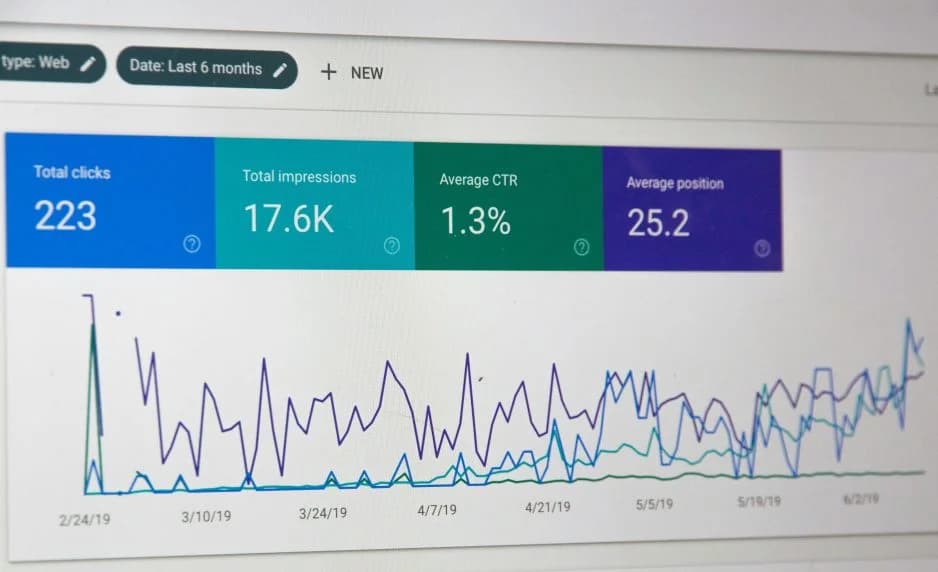
The best way to monitor this is through Google Search Console, which gives you a clear picture of your impressions, clicks, and average ranking positions over time. Pair this with a tool like Google Analytics to understand how organic traffic behaviour has changed and you will have a solid foundation for your investigation. Tools like SEMrush and Ahrefs also offer visibility tracking that can help you pinpoint exactly when rankings shifted and which pages were most affected.
Focusing On Content Quality Above Everything Else
If there is one lesson that every major Google update has reinforced over the past decade, it is that content quality matters enormously. Google has become increasingly sophisticated at identifying content that exists purely to rank, rather than content that genuinely informs, helps, or engages the reader. The Helpful Content Update in particular was a clear signal that Google wants to reward content written for people, not for algorithms.
This means that if your website is populated with thin articles, content that does not answer the reader's actual question, or pages that feel like they were written by someone with no real knowledge of the subject, you are vulnerable. Investing in well-researched, expert-led content that genuinely serves your audience is not just good practice, it is your best long-term defence against future updates.
Ask yourself honestly whether the content on your site would be useful to someone even if it never ranked in Google. If the answer is no, that is where you need to start making improvements.
The Role Of E-E-A-T In Surviving Updates
Google's concept of E-E-A-T, which stands for Experience, Expertise, Authoritativeness, and Trustworthiness, has become a central framework for understanding what the search engine values in a website and its content. Whilst E-E-A-T is not a direct ranking signal in the traditional sense, it underpins much of what Google's algorithms are trying to measure.
Demonstrating genuine expertise through your content, building a credible author profile, earning links from respected and relevant websites, and maintaining a trustworthy online presence all contribute to how Google perceives your site. If your website looks like it was built quickly to capture traffic without any real authority behind it, you will always be at risk when updates roll out. Building real credibility takes time, but it is the foundation that everything else rests on.
Technical Health Should Never Be Overlooked
Whilst content and authority rightly receive a great deal of attention in discussions about algorithm updates, the technical health of your website remains critically important. Slow page speeds, poor mobile experience, broken links, duplicate content issues, and crawlability problems can all impact how Google perceives and ranks your site, particularly following updates that place greater emphasis on page experience signals.
Conducting regular technical audits using tools such as Screaming Frog and monitoring your Core Web Vitals through Google Search Console should be a standard part of your ongoing SEO maintenance. A technically sound website gives your content the best possible platform to perform, and it removes one potential variable when you are trying to diagnose the impact of an algorithm change.
Avoid Chasing Short-Term Tactics
One of the most common reasons websites suffer badly following algorithm updates is that they have been relying on tactics that were never truly aligned with what Google was trying to reward. Buying links in bulk, using AI-generated content without editorial oversight, over-optimising anchor text, and creating pages purely to target keyword variations without offering genuine value are all approaches that may appear to work in the short term but carry significant long-term risk.
Every major update Google releases is, in some way, an attempt to devalue or penalise these kinds of shortcuts. If your strategy is built on foundations that you would be uncomfortable explaining to Google directly, it is worth reconsidering your approach before the next update does it for you.
Recovery After An Update
If your site has been negatively impacted by an algorithm update, recovery is possible, but it requires patience and genuine improvement rather than reactive changes made in panic. Google's guidance is consistent on this point: if you have been hit by a core update, the most effective path to recovery is addressing the underlying quality issues on your site.
This means conducting an honest audit of your content, removing or improving pages that do not meet a high standard, building genuine authority through outreach and earning quality backlinks, and ensuring your technical foundations are solid. Recovery rarely happens immediately, and it often takes until the next update for Google to reassess and reflect your improvements in the rankings. Stick with it, be consistent, and focus on building something that genuinely deserves to rank.
Staying Informed And Prepared
The SEO community is fortunate to have a wealth of reliable resources for staying informed about algorithm updates. Following Google Search Central on social media, reading publications like Search Engine Land and Search Engine Journal, and participating in professional communities ensures you are never caught completely off guard when a major update rolls out.
Understanding what Google algorithm updates are and how to survive them ultimately comes down to one principle: build your website and its content for real people, with genuine expertise and care, and you will always be better positioned than those who are trying to game the system. The rules of the game change, but the underlying principle never does.
Ian
Ian has worked in Digital Marketing for decades, and is a Google Partner for Google Ads and an expert in onsite and technical SEO. He has worked with hundreds of clients, helping them achieve success online, through SEO, PPC and Digital Marketing, working with local businesses through to national retailers.
View all posts →Related Articles

Why Rankings Are A Poor Way To Measure Your SEO Campaign Success Rate
Too many people still rely on the tracking of keywords to rate their campaign, which as we go onto discuss, is not the best way of judging the success and effectiveness of your campaign.

The Link Building Mistakes That Will Catch You In The End
Links are still a fundamental part of SEO and improving rankings in the search engines and even though more emphasis than ever has been placed on how good and optimised your website is, link building is simply something that cannot be overlooked if you want long term success.
Why CRO Is Now As Important For SEO Than Ever Before
For years, the digital marketing world treated conversion rate optimisation (CRO) and search engine optimisation (SEO) as separate disciplines. SEO focused on driving traffic, CRO focused on convertin...